


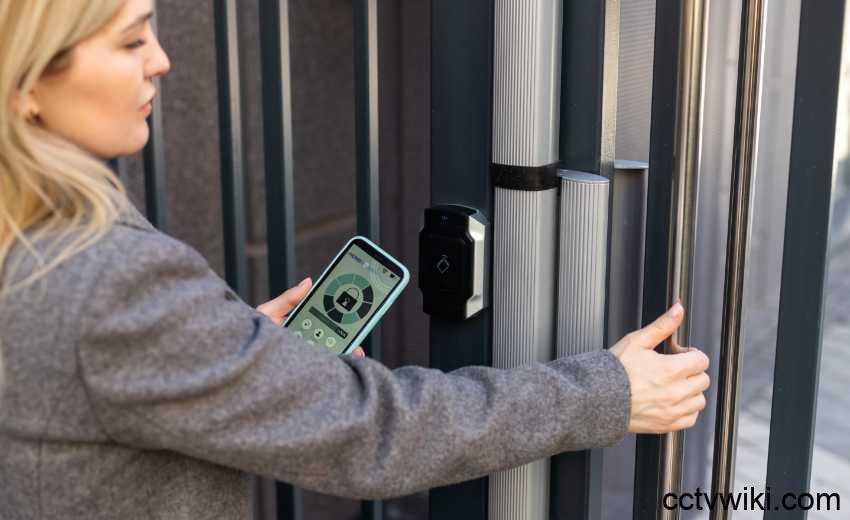
As modern access control systems increasingly intertwine with identity management platforms, HR systems, video surveillance, and cloud-based applications, a critical question emerges for physical security professionals: how do these intricate systems maintain reliability during outages or data discrepancies? For system integrators and consultants, resilience is no longer a luxury; it’s a foundational design principle.
Recent insights from industry leaders—Hanchul Kim, CEO of Suprema; Steve Bell, Strategic Technology Advisor at Gallagher Security; and Gaoping Xiao, Director of Sales-APAC at AMAG Technology—underscore a unified message: access control systems must be engineered for predictable and secure operation, even when parts of their complex ecosystem falter.
Designing with Disruption in Mind
Today’s access control systems rarely stand alone. They are deeply connected to identity providers like Microsoft Entra ID or Okta, rely on HR systems as authoritative identity sources, and often interface with video management systems for event verification. This profound interconnectedness undeniably boosts operational efficiency but also introduces a web of dependencies. What happens if a network connection fails, or an upstream database becomes temporarily unavailable? Crucially, doors still need to function safely and consistently.
Steve Bell articulates this challenge with clarity: “Reliable access control systems should be designed with disruption in mind, not as an exception.” He advocates for integrators and end-users to adopt a proactive, risk-based approach. “Integrators and customers need to take a risk-based approach to determine which functions must remain operational during outages or disaster scenarios. In many environments, maintaining safe and controlled access to people and critical areas is more important than secondary capabilities such as video monitoring.”
For integrators, this translates into identifying critical doors, sensitive areas, and life safety considerations right from the initial design phase. The overarching goal is to ensure that authentication and authorization decisions can proceed unimpeded, even in the absence of central servers, cloud platforms, or network links.
Distributed Intelligence at the Edge
A cornerstone architectural approach highlighted by all three experts is distributed intelligence. Hanchul Kim describes Suprema’s strategy as intentionally practical. “Suprema has taken a deliberately pragmatic approach when it comes to reliability. In distributed architectures, each smart reader can operate as an independent node, storing authorization data locally and continuing to make access decisions even if connectivity is interrupted. This allows doors to keep operating safely and predictably during outages.”
In this paradigm, the reader or controller positioned at the door possesses sufficient credential and authorization data to validate users without necessitating real-time communication with a central server. For integrators, this significantly reduces reliance on constant network connectivity and mitigates the risk of widespread disruption stemming from a single point of failure.
Bell echoes this distributed ethos: “This resilience is achieved by distributing intelligence across the system so that authentication and access privileges can continue to be enforced for extended periods, even when central systems or connectivity are unavailable.” This capability is paramount for integrators working in critical infrastructure, healthcare, data centers, or manufacturing—environments where extended outages are not theoretical but tangible threats due to power failures, cyber incidents, or maintenance events. A system solely dependent on centralized decision-making can quickly become a significant liability under such pressures.
The Role of Centralized Architectures
While distributed systems are gaining prominence, centralized architectures retain their relevance. Kim points out that the choice of architecture should always be dictated by specific site requirements. “Centralized architectures still have a place. Panel-based systems with two-door or four-door controllers remain appropriate in certain environments, and we support those models as well. The key is choosing an architecture that matches a site’s operational and regulatory requirements.”
For consultants, this underscores the imperative of customizing system design to align with a client’s regulatory obligations, operational complexity, and risk profile. In some settings, panel-based controllers with centralized oversight may be a better fit for compliance or integrate seamlessly with legacy infrastructure.
Gaoping Xiao further reinforces the importance of distributed capabilities, even at the panel level. “First, integrators should design systems with a distributed architecture, ensuring that access control panels can continue to operate independently even if servers or databases are temporarily unavailable. This ensures that existing cardholders and credentials remain functional during outages.” The practical implication for integrators is clear: resilience can be woven into multiple layers of a system. Whether intelligence resides primarily in smart readers, door controllers, or panels, the decisive factor is the unwavering ability to enforce access decisions locally.
Establishing a Single Source of Truth
Beyond the hardware architecture, robust identity management practices are equally pivotal. As access control systems integrate with enterprise IT platforms, inconsistencies between systems can unfortunately emerge. Data mismatches between HR systems, identity providers, and physical access databases can precipitate delayed revocations, erroneous permissions, or critical audit gaps.
Kim emphasizes the critical need for clarity in identity ownership. “Whether organizations use an identity management platform such as Microsoft Entra ID or Okta, or rely on an HR system as the authoritative source, what matters most is that there is a clearly defined single source of truth. When identity ownership is unambiguous, access control systems can remain consistent and predictable even when upstream systems are temporarily out of sync.”
For integrators, this necessitates early engagement with IT stakeholders. During system design, it is crucial to definitively establish which platform governs identity data and how synchronization processes are engineered. Without a clearly designated authoritative source, temporary outages can breed confusion regarding the validity of credentials. Thus, designing for resilience encompasses both physical hardware redundancy and meticulous logical data governance.
Managing Data Mismatches and Recovery
Outages are not the sole hurdle; data mismatches between systems can similarly erode reliability. Xiao underscores the importance of recoverable integrations. “Second, integrations between identity sources and connected systems should be designed to be recoverable, with clear backup and resynchronization procedures in place. In the event of data mismatches or outages, identities should be able to be restored or resynced in a controlled and auditable manner.”
For consultants guiding enterprise customers, this raises several pragmatic considerations: Are synchronization logs meticulously retained? Is there a precisely defined procedure for reconciling discrepancies? How are changes meticulously tracked and audited? An access control system that restarts after an outage but leaves inconsistent permissions in its wake can introduce significant compliance and security risks. Therefore, controlled resynchronization and robust auditability are indispensable components of a truly resilient design.
Kim highlights that resilience fundamentally revolves around operational continuity under less-than-perfect conditions. “In practice, designing for reliability is less about preventing every outage or mismatch and more about ensuring that access decisions remain auditable and secure when those situations occur.” For integrators, this paradigm shift reframes reliability as a management challenge as much as a technical one. Systems must be engineered to behave predictably, generate dependable logs, and facilitate comprehensive post-event reviews.
Building Multi-Layered Redundancy
In addition to distributed intelligence and stringent data governance, redundancy across multiple system levels is a recurring and vital theme. Bell underscores the importance of layered resilience. “Well-designed access environments build redundancy at multiple levels – including controllers, readers, and supporting infrastructure – so core access control can continue operating during events such as power loss, network outages, or cyber incidents.”
For integrators, this encompasses redundant power supplies, battery backups, sophisticated network failover mechanisms, and segmented architectures designed to prevent a single cyber incident from incapacitating the entire system. Bell further links physical access design to broader organizational planning. “Aligning physical access design with broader operational resilience planning is what separates systems that work in theory from those that perform reliably in the real world.” This alignment is increasingly pertinent as organizations adopt comprehensive enterprise resilience frameworks. Physical security professionals must coordinate seamlessly with IT, facilities, and risk management teams to ensure that access control systems actively support overall business continuity objectives.
Selecting Proven Solutions and Support Structures
Technology design alone cannot guarantee reliability; the quality of implementation and ongoing support are equally decisive factors. Xiao advises integrators to prioritize proven ecosystems. “Finally, integrators should deploy proven solutions supported by certified system integrators and manufacturer-backed support programs, ensuring long-term reliability and operational confidence.”
For consultants, this means meticulously evaluating not only product specifications but also vendor support capabilities, firmware update processes, and long-term roadmap alignment. Access control systems represent long-lifecycle investments. Opting for platforms with robust support structures can significantly mitigate the risk of operational instability over time.
Practical Implications for Integrators
Collectively, these expert perspectives converge on several critical design principles for integrators and consultants:
- Adopt a risk-based approach to identify critical functions that must remain operational.
- Distribute intelligence so that authentication and authorization can continue locally.
- Match architectural models to regulatory and operational requirements.
- Establish a clearly defined single source of truth for identity data.
- Design integrations with backup, resynchronization, and audit capabilities.
- Implement redundancy across controllers, readers, power, and network infrastructure.
- Align access control strategy with broader resilience planning.
As access control systems become increasingly integrated and data-driven, the definition of resilience must expand beyond mere door hardware. It now encompasses robust identity governance, seamless system interoperability, and a coordinated incident response strategy. For physical security professionals, the ultimate objective is not to eradicate every conceivable failure, but rather to guarantee that when disruptions inevitably occur, doors behave predictably, access decisions remain secure, and the organization maintains unwavering control.
In our increasingly connected security landscape, reliability is no longer solely measured by uptime. It is fundamentally defined by how effectively systems continue to function under duress, how transparently they recover, and how confidently integrators can stand behind the designs they deliver.