


In an era where patient safety and timely communication are paramount, Buhusi Hospital, a vital healthcare institution with nearly 200 beds, has always prioritized consistent and compassionate care. Faced with escalating expectations and new EU and Romanian regulations mandating emergency call systems at every bedside, the hospital embarked on an ambitious pilot project. Their mission: to leverage cutting-edge Hikvision technologies to revolutionize staff interaction, response protocols, and overall patient collaboration.
The ultimate goal of this groundbreaking initiative was to establish a technological cornerstone that would not only elevate the standard of care but also foster a more structured, insight-driven medical environment. Buhusi Hospital envisioned a future where nurses possessed a crystal-clear understanding of their patients’ status, particularly those requiring intensive monitoring, and could remain seamlessly connected while moving throughout the ward. Equally important was empowering patients, granting them quicker access to assistance and the comforting reassurance that watchful eyes were always present, even in the physical absence of staff.
To bring this vision to life, Buhusi Hospital collaborated with its trusted local technology partner, Network One Distribution. Together, they selected a 35-bed ward as the designated pilot zone. This particular ward caters to a diverse range of complex patient needs, including post-surgical recovery, elderly care, and cardiac cases, making it an ideal proving ground for this transformative digital healthcare solution.
Vital signs, fall alerts, and emergency buttons—all smartly connected
The intelligent integration of Hikvision’s AIoT solutions forms the backbone of Buhusi’s smart ward. Across areas most susceptible to falls, thirteen state-of-the-art **Fall Detection Radars** (IRS-BFDR6-H1AG) are discreetly wall-mounted. Employing advanced millimeter-wave technology, these radars reliably identify falls without the need for cameras, ensuring complete patient privacy while functioning flawlessly regardless of lighting conditions or temperature fluctuations.
Above each bed, **Auxiliary Care Radars** (IRS-BVSMR3-H3AG) provide continuous, non-invasive monitoring of crucial vital signs such as respiration and heartbeat, as well as bed occupancy. This innovative approach allows staff to gain early awareness of abnormal patterns and understand whether a patient is resting calmly, experiencing agitation, or has left their bed, all without disturbing their rest. In selected rooms, ten **Thermal Presence Detectors** (HM-TD1018-1/QR) further enhance situational awareness by accurately detecting movement and activity.
Empowering patients directly, every bed is equipped with a **Bedhead Terminal** (DS-KHH6020X-H). Placed within easy reach, these terminals allow patients to simply press a button to call the nurse station and communicate directly with staff via the integrated audio system. For high-risk areas like bathrooms, six **Emergency Buttons** (DS-KHS3100X) with pull cords ensure immediate access to help when it’s most critical.
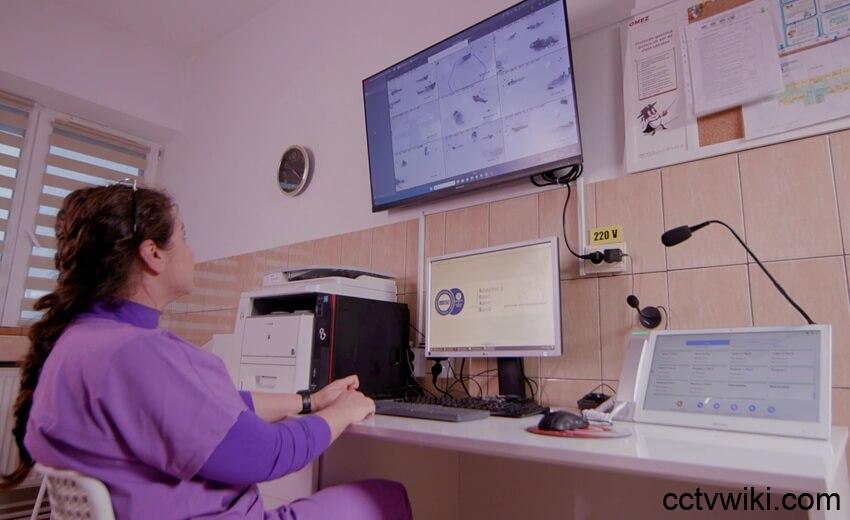
At the nerve center, the nurse station, a 15.6-inch **Touch Panel** (DS-KHM9803X) and a large 43-inch **UHD Monitor** (DS-D5043U3-1V0S) deliver a comprehensive, live overview of the entire ward. This includes real-time alarms, radar alerts, occupancy status, and crucial call response times. Staff can instantly identify what requires immediate attention, what has been acknowledged, and how workload is distributed, streamlining their workflow dramatically.
Nurses are equipped with **Handheld Terminals (PDAs)** (DS-MDT202) that receive real-time notifications, freeing them from being tethered to the nurse station and enabling rapid responses to alerts. These PDAs are a strategic investment, selected with future expansion in mind. Once fully integrated with the hospital information system, these versatile devices will support medication administration, barcode scanning, secure access to patient records, and a host of other critical clinical tasks.
Behind the scenes, the network infrastructure is robust and efficient. Fourteen **16 Port Fast Ethernet Smart POE Switches** (DS-3E1318P-EI/M) power all bedside terminals and sensors via Power over Ethernet (PoE), eliminating the need for separate adapters and guaranteeing stable, low-latency communication. Simultaneously, two **Wi-Fi 6 3000M In-Wall Access Points** (DS-3WAP621E-SI) provide high-speed, reliable connectivity for mobile devices throughout the ward.
The entire system is seamlessly integrated and managed by the **HikCentral Professional** platform. This powerful software ties everything together, generating detailed reports that provide hospital managers with invaluable insights into ward performance, enabling continuous optimization. Call frequency reports, for instance, pinpoint which patients or rooms require the most assistance, while response time reports highlight how swiftly nurses react to various types of alarms. Crucially, every alarm and interaction is meticulously recorded, creating a comprehensive digital record essential for incident documentation and ongoing quality improvement initiatives.
When technology enhances care: less stress, faster response, better decisions
This digital transformation has already yielded a measurable and profoundly positive impact on daily operations. Patients report feeling significantly more secure, knowing that help is consistently within reach and that they can be heard and attended to immediately. Family members, too, have expressed greater confidence in the care their loved ones receive, reassured by the automatic detection of falls and vital sign changes.
For the nursing staff, the system has dramatically reduced unnecessary walking and provided a much clearer sense of priorities. “If we are needed, the alerts tell us exactly what type of assistance is required. It means we can now respond much faster and with greater certainty,” affirms Adela-Larisa Horvat, a Biomedical Engineer at Buhusi Hospital. With continuous monitoring and two-way communication capabilities, nurses can now dedicate more energy to clinical tasks, shifting focus from manual checks to proactive patient care.
Shift handovers have also seen significant improvement, thanks to the digital records and event timelines. Supervisors gain a structured overview of where attention is most needed, facilitating more effective staff allocation. “The new system gives us valuable insights that enable us to improve the workflows in the ward, and helps to reduce fatigue and stress among the team,” notes Dr. Mihaela Colbeanu, Attending Physician in Internal Medicine.
With one fully digital ward successfully demonstrating the immense value of connected care, Buhusi Hospital now possesses a robust blueprint for a broader, hospital-wide transformation. This strategic move ensures full compliance with Romania’s new emergency-call regulations and strongly positions the institution for future digital healthcare programs and European modernization initiatives.
This pioneering project at Buhusi Hospital stands as a powerful testament to how smart sensors, structured communication, and mobile workflows can converge to significantly enhance safety, efficiency, and patient confidence. It marks a significant stride toward a modern, fully digitalized hospital environment, showcasing how AIoT (AI-powered Internet of Things) technologies can empower caregivers to deliver safer, faster, and truly human-centered care.