


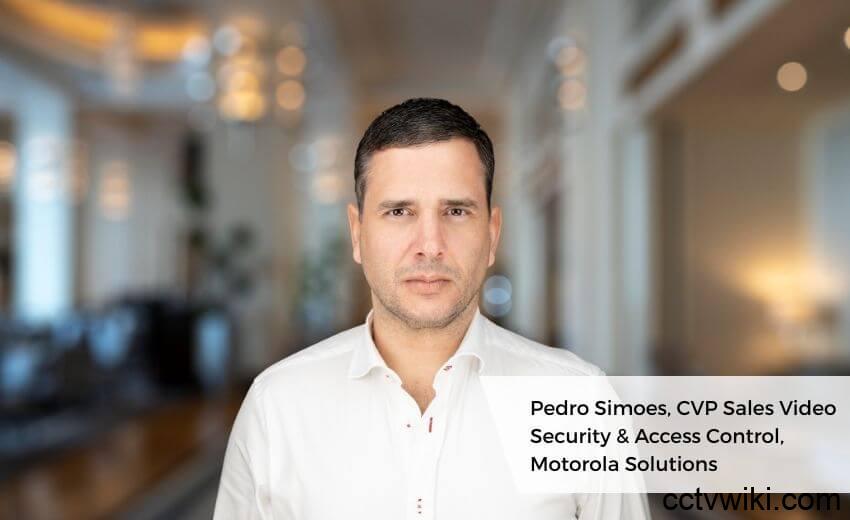
Motorola Solutions, a name synonymous with safety technology for nearly a century, commanded significant attention at Intersec Dubai. Asmag.com seized the opportunity for an exclusive interview with Pedro Simoes, Corporate Vice President of Sales for Video Security & Access Control at Motorola Solutions, to delve into the company’s evolving strategy and groundbreaking innovations.
Unlocking the Power of an Integrated Ecosystem
Asked about the standout solutions for an integrator visiting the Motorola Solutions booth, Simoes highlighted the company’s unique, customer and partner-friendly ecosystem. “The beauty of being in the safety technology business for close to 100 years is that you can look back on a rich history of delivering diverse technologies through a very strong channel partner community,” Simoes explained. “As the convergence of voice, data, and video technologies continues, our end-users benefit from having fully integrated, AI-powered solutions that enable integrators to serve multiple domains.”
Motorola Solutions’ commitment to research and development also sets it apart, continuously driving new innovations. At Intersec, the company showcased cutting-edge, generative AI-enabled solutions, including Avigilon Visual Alerts and Avigilon Intercom Touch. These innovations are designed to empower security teams to transition from reactive incident response to proactive management, offering user-friendly interfaces and natural language capabilities.
Addressing Evolving Expectations in a Complex Security Landscape
The security environment is becoming increasingly complex, particularly for organizations managing multiple sites. Simoes emphasized Motorola Solutions’ collaborative approach with integrators to understand and address real customer pain points. This close consultation allows them to deploy solutions that leverage the core capabilities of their ecosystem, delivering meaningful and optimal outcomes.
A significant trend Simoes observed is the demand for robust integration of multiple systems, such as radio communications and video security. “Customers and integrators want to be able to incorporate multiple new components within their security platforms and know that they will simply work,” he noted. To meet this demand, Motorola Solutions has developed an open security platform, enabling seamless integration with any manufacturer’s products. This open architecture is particularly crucial as clients increasingly adopt AI and cloud technologies while seeking to retain the functionality of their existing systems.
The Cloud Revolution and the Evolving Integrator Skillset
Simoes pointed to a transformative period in the security industry, with AI and cloud conversations shifting from future aspirations to present realities. This necessitates a broader focus for integrators, who must now become experts in networking and data.
“Many of our partners have had experience in delivering subscription-based services long before that trend took off in the security industry,” Simoes remarked. “For them, conversations about technology change are easier than for traditional security systems integrators who went through the transition from analog to IP cameras.” He predicted a significant shift, estimating that by 2030, approximately 50% of the security industry will have migrated to the cloud.
Embracing the Cloud: From CAPEX to OPEX and Beyond
Addressing the varying willingness among end-users to adopt cloud solutions, Simoes drew parallels to everyday life. “If you think about life today, many services are subscription-based, from the apps on our phones to Netflix in our homes,” he said. “End users are open to adopting this model because they’re seeing the benefits—cybersecurity updates, good user experiences, and the delivery of new features.”
He cited the example of Fortune 500 companies, with over 90% now hosting everything in the cloud, including CRMs and back-end systems. This massive change is driven by end-user demand and a clear understanding of the benefits and business model. Integrators, too, stand to gain from this transition, offering value-added services and securing predictable, recurring revenue streams that facilitate future planning. Motorola Solutions actively supports its channel partners, viewing them as an extension of the organization and equipping them with training, support, and incentives to navigate these industry shifts successfully.
Strategic Acquisitions and Future Growth
Regarding Motorola Solutions’ expanded portfolio in video security and access control, notably through acquisitions like Pelco, Simoes emphasized a strategic approach. “Every acquisition delivered by our executive team was made with a clear view of what was missing from our portfolio and could add genuine value to our customers,” he explained. The focus now is on delivering best-of-breed technologies and solid integrations that maximize the potential of these newly acquired organizations.
He highlighted Silent Sentinel, an acquisition bringing long-range cameras capable of identifying objects up to 30 kilometers away, now integrated into their platform to enhance border control and government security solutions. While unable to disclose future plans, Simoes affirmed their continuous search for opportunities to build on existing solutions and maintain industry leadership. He underscored Motorola Solutions’ evolution from a radio communications company into a comprehensive safety and security solutions provider, equipped to tackle customers’ most complex challenges.
Booming Regions and Verticals Driving Demand
Looking ahead to significant growth areas by 2026, Simoes pointed to the Middle East, a rapidly developing region with substantial investments. “There is a lot of investment in the Middle East, and we’re seeing the transportation, healthcare, and oil & gas sectors all booming,” he stated.
Additionally, increased defense spending across the Middle East and Europe is driving demand for security solutions across various sectors. Governments and enterprises alike are seeking to create safer cities, facilities, and services, alongside enhanced protection for workers and communities, further fueling the need for advanced security technologies.