


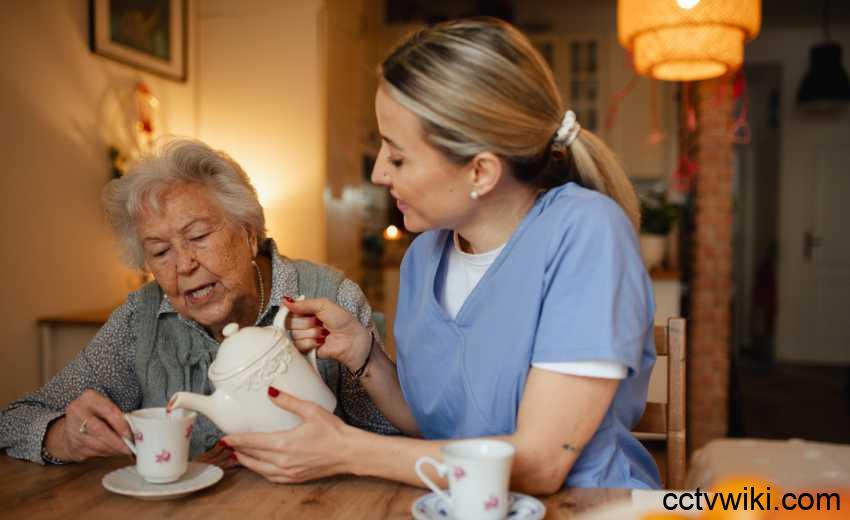
Access control in elderly care facilities demands a profoundly different approach compared to conventional office, commercial, or industrial settings. For systems integrators and consultants, the true challenge extends beyond merely deterring unauthorized entry; it involves crafting solutions that meticulously protect vulnerable residents while simultaneously upholding their dignity, fostering independence, and streamlining critical care workflows.
“When you look at elderly care facilities, the access control challenge is very different from a typical office or commercial building,” explains Gaoping Xiao, Director of Sales-APAC for AMAG Technology. “In most environments, security is mainly about keeping unauthorized people out. In elderly care, it is much more nuanced. You have to protect residents, support staff, allow family and approved visitors to move appropriately through the facility, and still maintain a sense of dignity and independence for the people who live there.”
This fundamental difference elevates access control in elderly care to an issue of identity, workflow, and life-safety, transcending simple door security. Facilities must expertly manage a diverse array of individuals—residents, caregivers, nurses, administrators, maintenance teams, contractors, family members, and healthcare specialists—each with distinct and evolving access requirements.
Matthew Lewis, Director of Product Marketing for IAMS at HID, highlights that elderly care facilities grapple with a “uniquely complex security environment where safety, accessibility, and dignity must coexist.” Unlike many commercial sites, they also contend with high visitor volumes, often stretched staff resources, and inherent risks associated with resident wandering, cognitive impairment, and mobility limitations.
For integrators, this imperative dictates that system design must commence with a deep understanding of specific user groups, anticipated movement patterns, and designated risk zones. A one-size-fits-all access policy for an entire facility is almost certainly insufficient and counterproductive.
Identity-Driven Access Becomes Essential
At the heart of the access control challenge in elderly care is the delicate balance between robust safety protocols and an enhanced quality of life. Residents should never feel confined, while staff and approved visitors must navigate the facility with maximum efficiency.
“You may have residents, caregivers, nurses, administrators, maintenance teams, contractors, and visitors all using the same space, but they all need very different levels of access,” Xiao reiterates. “That is where a modern access control system, and really the identity management system behind it, becomes so important. It should be able to determine not just whether someone has a credential, but who they are, what their role is, what areas they should access, and when that access should apply.”
This pivotal shift from basic credential validation to sophisticated identity-driven access control is indispensable in care environments. Staff often work dynamic shifts, contractors may require strictly temporary access, and family members might be permitted into resident areas during specific visiting hours but barred from medication rooms, staff-only zones, or sensitive records areas.
Xiao emphasizes that an identity-driven approach empowers the system to make more intelligent, nuanced decisions in the background. “That means the right people can move through the building easily, while sensitive or higher-risk areas remain protected,” he affirms.
For security professionals, this underscores the critical need for robust integration between access control, visitor management, identity management, video surveillance, and alarm systems. The ultimate objective is to facilitate safe and seamless movement without imposing unnecessary barriers or friction.
Barrier-Free Does Not Mean Uncontrolled
Critically, a barrier-free environment in elderly care does not equate to an uncontrolled one. The most effective systems are often those that ingeniously reduce friction for authorized users while quietly and consistently enforcing policy in the background.
“Access control should help create a barrier-free experience, not a restrictive one,” Xiao asserts. “The best systems are the ones that reduce friction for the right people. Staff should be able to move efficiently and get where they need to go without delays. Residents should feel supported, not confined. And visitors should be able to access approved areas in a controlled but welcoming way.”
Lewis echoes this sentiment, stating that effective systems should “fade into the background, enabling security without feeling clinical or restrictive.” If access control systems inadvertently create slow check-ins, confusing processes, or overt physical barriers, users are likely to seek workarounds, compromising security.
“Visitor management becomes especially effective when it helps humanize security, using intuitive, touchless, and guided experiences that welcome visitors while quietly enforcing policy,” Lewis adds.
This user experience consideration is paramount for integrators. In elderly care, the ease of use directly impacts security outcomes. If a process is overly cumbersome, staff might prop doors open, visitors may bypass check-in procedures, or credentials could be inadvertently shared.
“When access control supports natural movement rather than interrupting it, residents retain independence, staff remain efficient, and visitors understand expectations without confrontation,” Lewis concludes.
Interior Doors Are Key Risk Points
While main entrances remain a primary security focus, a significant portion of risks in elderly care facilities originates *inside* the building. This makes the strategic control of interior doors a crucial component of any comprehensive security design.
“It is extremely important to secure not just the front entrance, but interior doors throughout the facility,” Xiao stresses. “In elderly care, a lot of the real risk is actually inside the building. You may need to control access to medication rooms, staff-only areas, memory care wings, records storage, or other sensitive spaces.”
A layered security approach allows public and communal areas to remain open and inviting, while higher-risk zones receive precisely tailored, stronger controls. Medication rooms, IT infrastructure rooms, records storage, staff-only areas, and memory care units may all necessitate distinctly differentiated access rights.
Lewis affirms that “risk does not stop at the front entrance.” He points out that healthcare and life-safety authorities consistently emphasize zoned security, where areas such as “medication rooms, staff-only areas, memory care units, and IT or records rooms require differentiated access controls to prevent theft, elopement, or accidental harm.”
For consultants, the intricate challenge lies in avoiding both under-securing and over-securing. Insufficient control exposes residents, staff, and operators to unacceptable risks. Conversely, excessive control can transform the facility into a restrictive, “locked-down” environment, potentially impeding emergency egress and the overall sense of well-being.
Compliance and Integration Must Guide Design
Access control systems in elderly care must be meticulously designed in close conjunction with stringent life-safety requirements. Interior locking strategies, in particular, need to comprehensively account for emergency evacuation protocols, fire codes, and the unique challenges presented by residents who may be unable to self-evacuate.
Lewis highlights that regulations such as “NFPA 101 Life Safety Code” explicitly mandate that “interior locking must balance containment with safe egress, particularly for residents who may be unable to self-evacuate during emergencies.”
“In practice, securing interior doors allows facilities to maintain openness in public areas while quietly protecting high-risk zones, supporting both resident safety and compliance,” Lewis explains.
Xiao states that interior door security “lets you apply the right level of protection in the right places without making the whole building feel locked down.” He emphasizes that it “creates layers of security, which is especially important in an environment where safety, privacy, and day-to-day care all have to work together.”
For systems integrators, this necessitates early and continuous coordination with facility managers, expert consultants, and local authorities having jurisdiction. Every element—door hardware, credentials, locking devices, alarm interfaces, video verification, and emergency release mechanisms—should be conceived and implemented as part of one cohesive, integrated design.
The overriding principle is proportionality. Access control in elderly care should meticulously protect sensitive areas, bolster staff efficiency, thoughtfully manage visitors, and, above all, preserve the dignity and independence of residents. For integrators and consultants, the true opportunity lies in delivering sophisticated systems that enable safe, well-managed movement, rather than simply adding more locked doors.