


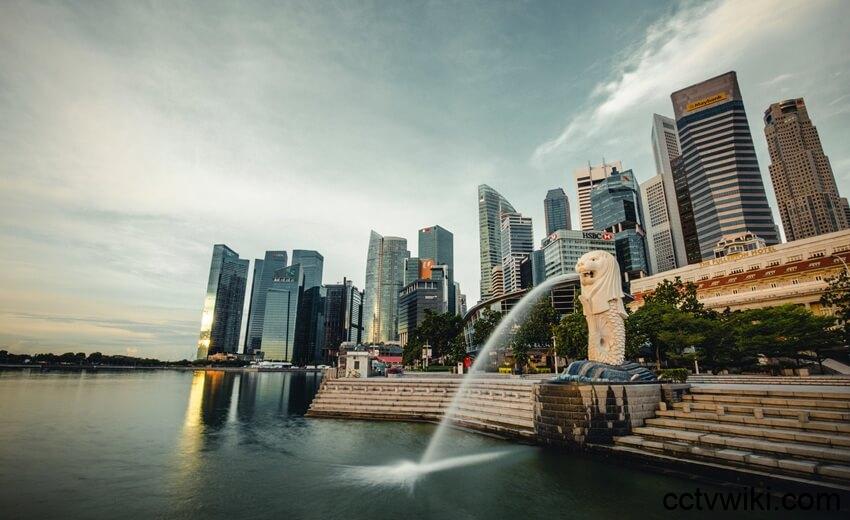
Singapore, often seen as a smaller player in the vast APAC region, stands as a uniquely mature and influential market within the dynamic landscape of physical security and IoT devices. Far from merely a hub for international companies with world-class infrastructure, this city-state boasts a sophisticated security ecosystem that, while lacking the sheer volume of projects seen in other rapidly growing nations, excels in high-margin, flagship initiatives demanding the latest cutting-edge technology. This strategic focus more than compensates for its compact size.
“We’re seeing a strong shift toward intelligent, data-driven security systems,” explains Fei Zixuan, GM of Hikvision Singapore. “Singaporean clients are actively seeking advanced solutions and truly grasp the power of AI. At Hikvision, we’re at the forefront of this transformation through our Guanlan AI large-scale model, which seamlessly integrates computer vision, multimodal perception, and knowledge reasoning.” This emphasis on technology-driven solutions and full integration is paramount across Singapore’s most critical sectors.
Dominant Verticals Reshaping the Security Landscape
Given its geographical constraints, Singapore’s security landscape differs significantly from nations like Vietnam, which are dominated by sprawling manufacturing industries. Instead, its physical security market is shaped by the regional headquarters of multinational corporations, vital public infrastructure, and major transportation hubs, most notably Singapore Changi Airport. Yet, Singapore also hosts a substantial petrochemical industry, concentrated on Jurong Island, which features a highly integrated, island-wide access control infrastructure.
A testament to its forward-thinking approach, Singapore is currently developing the Tuas Mega Port, set to become the world’s largest fully automated harbor facility and a monumental integration project for advanced security technology.
Data centers also play a crucial role, though with a distinct Singaporean twist. Here, the government mandates the use of green technology and low emissions in this energy-intensive vertical. As many providers adopt a holistic sustainability approach, security systems – despite accounting for only a fraction of a data center’s total energy consumption – are meticulously factored into the overall efficiency equation. Low electricity usage for security cameras and access control infrastructures is key. Increasingly, these systems are also repurposed to monitor the energy consumption of other infrastructure, positioning them as essential components in broader IoT deployments.
Public Sector as an Innovation Catalyst
Singapore’s stringent requirements for data centers highlight the government’s significant influence. However, unlike in other highly regulated markets, the state acts as a facilitator of economic activity rather than a stifler. Consider the stark contrast: while new cybersecurity rules for security cameras led to a “wait-and-see” freeze in markets like Vietnam and India, Singapore consistently announces changes proactively and incentivizes compliance. For instance, amendments to Singapore’s Cybersecurity Act, implemented in October, were accompanied by Productivity Solutions Grants, specifically designed to help SMEs meet new requirements.
Earning certification in Singapore carries substantial weight across the region. Companies demonstrating compliance here gain a competitive edge in high-margin verticals throughout other Southeast Asian markets, as Singapore is widely regarded as the gold standard.
The Dawn of Full Cyber-Physical Convergence
What remains a mere buzzword elsewhere has become a tangible reality in Singapore: cyber-physical convergence. The city-state no longer distinguishes between systems protecting against physical threats and those safeguarding against cyberattacks.
For example, edge devices deployed to secure the perimeter of a corporate campus are now understood to also delineate the digital perimeter. Consequently, they must be hardened against cyber breach attempts with the same rigor as a company’s server room, incorporating edge-to-core encryption and multi-factor authentication. This ensures that a physical breach of a device cannot be exploited as a digital “backdoor” into the client’s internal network.
Various government initiatives have catalyzed this evolution. Following the latest amendment to the Cybersecurity Act, security cameras and other devices installed by businesses above a certain size are classified as “third-party owned critical Information infrastructure” (3PO CII). This designation means that if a bank utilizes a cloud-based video management system, it is legally responsible for its cybersecurity as if it owned the servers directly.
For integrators, this has necessitated a fundamental shift from simply “box-shifting” to a “security-by-design” approach, driving specialization in both physical and cybersecurity domains. The government’s proactive involvement in this realm has not only created business opportunities but also fostered significant public trust. A 2022 study by the German Konrad Adenauer Stiftung think tank revealed that 83% of Singaporeans believed the government handled sensitive personal data “well” or “very well.” This contrasts with 79% who expressed concern when disclosing personal data online, particularly during private sector e-commerce transactions. This high level of data privacy and cybersecurity awareness, coupled with robust trust in government regulations, is unlikely to have diminished.
Home Security Embraces the IoT Revolution
Home security plays an outsized role in Singapore, with residents spending significantly more on such devices than their counterparts in other APAC markets. This trend is partly attributable to Singapore’s wealth, boasting an estimated GDP per capita of US$92,930 in 2025 – more than 15 times the average of all ASEAN markets combined, and double that of Malaysia, the bloc’s second-wealthiest nation. Furthermore, a remarkable homeownership rate of approximately 90% encourages Singaporeans to invest substantially in their residences.
Yet, this might initially seem surprising given that an IEP study from 2023 ranked Singapore 6th worldwide in “perceived security.” The simple answer lies in the evolution of home security far beyond its traditional functions, morphing into a core component of the IoT and smart living space. In Singaporean homes, security systems are primarily leveraged for applications such as elderly care and parcel management. They have moved beyond mere surveillance to enable AI-assisted living, presenting immense opportunities for suppliers of home IoT hardware and software.
Emerging Opportunities in the Johor-Singapore Special Economic Zone (JS-SEZ)
The formalization of the Johor-Singapore Special Economic Zone (JS-SEZ) early this year marks a strategic collaboration between Singapore and Malaysia designed to accelerate cross-border growth and attract global investment.
From the perspective of global firms, the JS-SEZ has given rise to a “Singapore-plus” strategy. While manufacturing and data storage operations are strategically relocating to Johor to capitalize on available land and power resources, command and control functions remain anchored in Singapore. This includes the establishment of cross-border Security Operations Centers (SOCs) specifically designed to monitor expansive manufacturing and data center assets within the 3,500 sq km zone across the border in Malaysia.
Security manufacturers are understandably optimistic about Singapore’s prospects as it solidifies its position as the undisputed regional security hub.
“The Singapore market is booming,” affirms Fei. “The government is making substantial investments in commercial and public security projects. At Hikvision, we are actively building bridges, for instance, between smart city management and critical infrastructure protection.”