


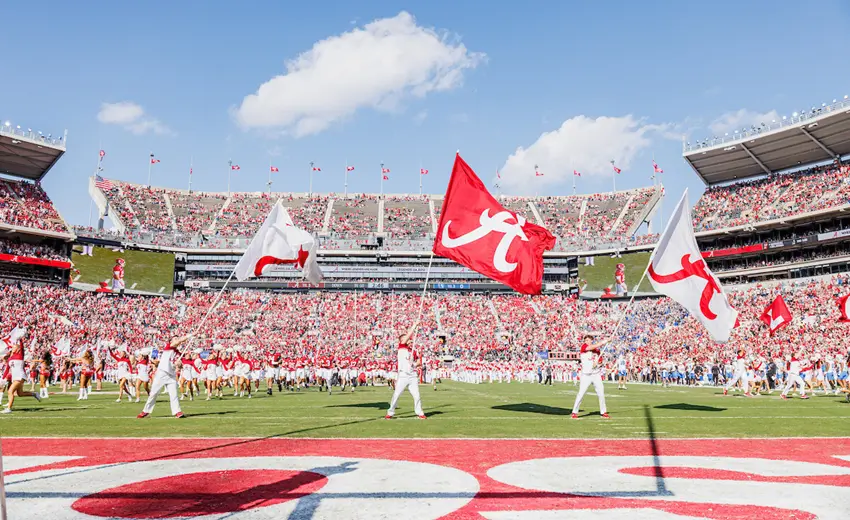
The digital age brings new challenges to even the most traditional institutions, and the University of Alabama is tackling one head-on: unauthorized drones. Recognizing the growing threat to its sprawling campus and electrifying game-day events, the prestigious university has partnered with D-Fend Solutions, adopting their state-of-the-art EnforceAir counter-drone system. This strategic move establishes a pioneering model for higher education airspace security, safeguarding critical infrastructure, campus operations, and the massive public gatherings that define Alabama’s vibrant culture.
Securing a Metropolis: The University’s Unique Airspace Challenge
Imagine a bustling metropolis, alive with academic pursuit and passionate fandom – that’s the University of Alabama. As a Tier One R1 research institution, its 3.5 square miles encompass 330 buildings and nearly 50,000 students, faculty, and staff, effectively forming a vibrant “small city.” But this dynamic environment transforms dramatically during football season. Bryant-Denny Stadium alone welcomes over 100,000 fervent fans, while an additional 70,000 tailgaters create a “sea of humanity” across the campus Quad and surrounding areas, making it one of the largest temporary population centers in Alabama. Such immense gatherings present unparalleled security challenges, especially from the skies.
“D-Fend and EnforceAir have been game changers for us,” affirmed Michael Kelley, Director of Security Technologies at the University of Alabama. “Our situational awareness has expanded dramatically. Not only do we know what is in the airspace around our campus, but we have the ability to mitigate if necessary.”
Precision Protection: Proactive Defense Without Disruption
The University’s decision was not made lightly. After a comprehensive, season-long evaluation that pitted EnforceAir against other leading technologies in live performance trials, D-Fend’s solution emerged as the clear leader. Its distinguishing capability lies in its support for controlled mitigation – a non-kinetic, non-disruptive approach. This allows authorized, trained personnel to address drone threats in accordance with evolving regulatory frameworks, crucially avoiding the risks of collateral damage from kinetic measures or the disruption of vital campus communications caused by jamming technologies. It’s a solution that prioritizes safety and continuity above all else.
Real-World Impact: Key Insights from EnforceAir’s Deployment
The deployment of EnforceAir has yielded critical operational insights, demonstrating its effectiveness in a complex collegiate environment:
- Unveiling the Threat Landscape: The sheer volume of unauthorized drone activity was startling. During just one evaluation period, the system detected over a thousand drones operating near campus, highlighting the pervasive nature of UAS (Unmanned Aircraft System) threats in such open environments.
- Expansive Reach: Positioned strategically, a single EnforceAir unit delivered impressive, long-range detection across the entire campus and its approach corridors, proving its capability to monitor vast areas effectively.
- Seamless Command Integration: The University has seamlessly integrated EnforceAir into its Emergency Operations Center (EOC), fostering a Unified Command Framework that facilitates crucial collaboration with local, state, and federal partners during major events, ensuring a coordinated response.
- Rigorous Selection: The University’s rigorous selection process, which involved extensive review of multiple leading systems, ultimately confirmed EnforceAir’s superiority. Its intuitive interface and unparalleled technical capability for safe, non-disruptive mitigation made it the unequivocal choice.
Safeguarding the Future: Research, Events, and Operational Continuity
The threat posed by unauthorized drones extends beyond security; it encompasses the very continuity of academic life and high-stakes events. From the risk of accidental collisions and falling debris to the potential disruption of cutting-edge research and high-profile athletic competitions, the stakes are incredibly high. “Higher education institutions face unique challenges: open environments, major public events, critical research, and evolving regulatory frameworks,” explained Zohar Halachmi, CEO and Chairman of D-Fend Solutions. “EnforceAir enables proactive, non-disruptive control that aligns with both safety and operational continuity, providing a crucial layer of protection.”
Echoing this sentiment, Michael Kelley emphasized the university’s forward-thinking approach: “We are initiative-taking, not reactionary. We have to plan for the future, and D-Fend’s technology allows us to do exactly that, securing our airspace for today and tomorrow.”