


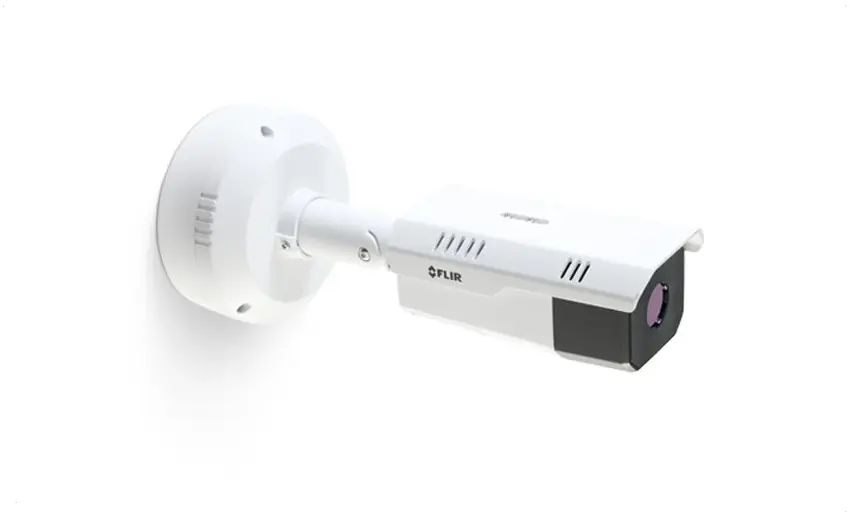
Flir, a Teledyne Technologies company, is revolutionizing site security with the launch of its FCB-Series AI thermal analytics camera. This groundbreaking addition to Flir’s mid-range infrared security portfolio seamlessly blends robust, weather-agnostic thermal sensitivity of Intelligence and Sensitivity: A New Era of Detection
With the Flir FCB-Series AI thermal camera, businesses can detect, classify, and respond to potential threats faster than ever before, actively preventing costly incidents and ensuring safe, efficient operations.
Key features setting the Flir FCB-Series AI apart include:
- Advanced DNN Deep-Learning Video Analytics: These sophisticated onboard neural networks enable reliable identification and categorization of individuals and vehicles with exceptional precision. Businesses can now distinguish genuine threats from common false alarms – such as swaying trees, rain on the camera lens, or curious small animals. When wind whips a construction tarp or foliage swirls during a storm, the FCB-Series AI remains silent, preventing unnecessary alarms from inundating the video management system (VMS).
- Nexus-Enabled Target Geolocation: This feature significantly enhances situational awareness, facilitating precise hand-off to a Pan-Tilt-Zoom (PTZ) camera for close-up tracking of an intruder navigating corners, fences, or buildings. By forming a cohesive security ecosystem, this workflow promotes real-time data sharing and interoperability among thermal cameras, visible cameras, radars, and analytics platforms.
- Flexible Lens Options: With five lens choices spanning 18° to 50° field of view (available in VGA or QVGA resolution), businesses can expertly cover long fence lines, tight corners, and complex building layouts without a single blind spot. The challenge of matching security coverage to diverse sites becomes a thing of the past.
- Industry-Leading Thermal Sensitivity: An impressive
Wide Application Range: Resilient Security for Diverse Environments
Easy to install and boasting a rugged IP67 rating, this camera is engineered to withstand dust, extreme heat, and driving rain, delivering cost-effective, reliable thermal detection across a multitude of perimeter, small area, and remote site applications.
These include:
- Small-to-medium commercial businesses: Ideal for construction sites, warehouses, and shopping malls.
- Campuses and industrial plants: Perfect for education facilities, business parks, and factories.
- Energy and remote installations: Crucial for solar farms, utilities, and storage yards.
Get a Clearer View: Elevating Security in a Changing World
As incidents of theft and burglaries at businesses continue to escalate, implementing an effective security system has become paramount. Many mistakenly believe that adopting a new security system necessitates a complete overhaul. However, Flir champions a smart, multi-layered strategy that incrementally enhances security through foundational systems, seamless camera integration, intelligence adoption, and proactive maintenance.
This adaptable approach empowers businesses to develop a security system tailored to their specific site, all while adhering to budgetary constraints and ensuring continuous improvements in protection.
“If you struggle with false alarms from non-threat movement or challenging weather, inconsistent detection in adverse conditions, or complex system integration and calibration needs, our FCB-Series AI will allow you to see more, know more, and protect more,” stated Matt Strautman, Director of Global Business Development at Flir.
“Advanced thermal imaging and AI analytics work in concert to deliver high-accuracy detection, even in the most adverse weather or lighting conditions. With flexible lens options, Nexus integration, and a rugged all-weather design, our FCB-Series AI thermal camera is not only the smart choice for precise and reliable protection, it’s a cost-effective way to upgrade an outdated security system. It will integrate seamlessly with your current set-up and provide insights that expedite your decision-making.”