


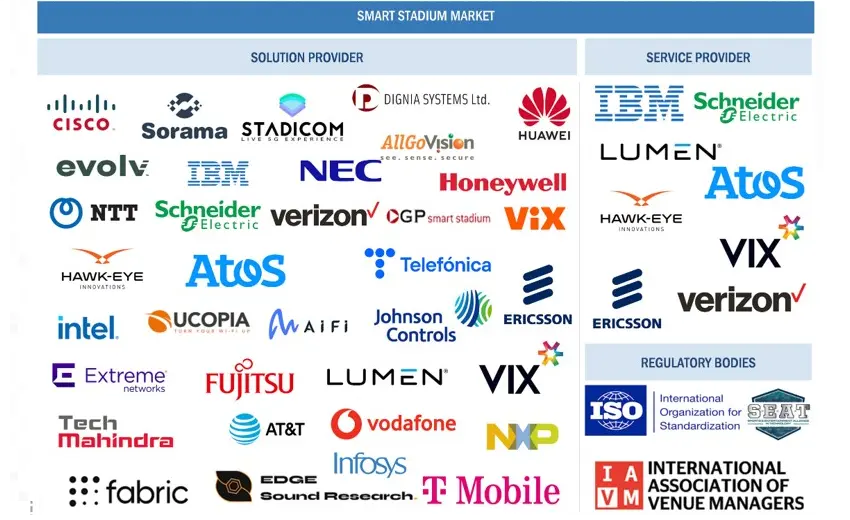
The era of the traditional stadium is rapidly evolving. Today’s “smart stadiums” are digitally advanced arenas designed not just for large-scale events, but to deliver unparalleled attendee experiences, optimize operational efficiency, and unlock dynamic new revenue streams. This technological transformation is set to propel the smart stadium market to an estimated USD 41.68 billion by 2029, according to a comprehensive overview by MarketsandMarkets.
Historically, stadiums focused primarily on seating capacity and fundamental infrastructure. However, as technology surged forward, so did the expectations of fans, event organizers, and venue operators. This shift spurred the integration of pioneering solutions like ubiquitous Wi-Fi, vibrant digital signage, and sophisticated crowd management systems.
Modern smart stadiums have embraced features such as real-time data analytics, intuitive mobile applications for seamless ticketing and navigation, and fortified security protocols powered by IoT devices and AI-driven surveillance. Key drivers behind this explosive growth include the escalating demand for immersive fan experiences through augmented reality (AR) and virtual reality (VR), the pervasive use of mobile devices during events, and the critical need for operational efficiency to curb escalating costs. Despite this momentum, challenges persist, notably high initial investment requirements and growing concerns surrounding data privacy and cybersecurity.
Looking ahead, the market is poised for further expansion with the global rollout of 5G networks, paving the way for even more advanced functionalities like smart parking, dynamic digital content management, and automated facilities control. Coupled with increasing interest in sustainable infrastructure and smart city integration, these intelligent venues are destined to become an indispensable cornerstone of the sports and entertainment landscape, sparking continuous innovation in both fan engagement and venue administration. At its core, the smart stadium market is about harmonizing cutting-edge technologies—including 5G, IoT, AI, and big data analytics—to elevate the fan journey and streamline every aspect of stadium operations. These innovations provide real-time insights into crowd dynamics, security, and maintenance, offering personalized services from mobile ticketing to in-seat food delivery and interactive app experiences, fundamentally transforming venues into efficient, customer-centric hubs.
The burgeoning appetite for connected stadium experiences and the imperative for heightened security are twin forces fueling market acceleration. Venues are increasingly adopting technologies to meticulously monitor crowd movements, safeguard public safety, and ensure uninterrupted connectivity. As fan expectations for lightning-fast internet, live streaming, and immersive content soar, smart stadium solutions are no longer a luxury but an essential competitive advantage within the global sports and entertainment industry.
Furthermore, breakthroughs in 5G technology, promising ultra-fast speeds and minimal latency, are a major catalyst. This connectivity enables real-time analytics crucial for managing vast crowds, thereby enhancing safety and service delivery. Government initiatives promoting smart infrastructure and strategic partnerships between technology giants and sports organizations are only accelerating this global market expansion.
Surging demand for enhanced fan experiences
The quest for an elevated fan experience is a paramount driver for the smart stadiums market, as attendees increasingly seek immersive and engaging environments that transcend traditional event attendance. Smart stadiums skillfully meet these demands by leveraging advanced technologies like augmented reality (AR), intuitive mobile applications, and real-time data analytics to craft interactive and deeply personalized experiences. For example, dedicated mobile apps empower fans with features such as seat upgrades, instant replays, and direct food delivery to their seats, streamlining their experience and keeping them immersed throughout the event. Crucially, the deployment of robust Wi-Fi and 5G networks facilitates live streaming of game statistics and player information, dramatically enriching the in-game atmosphere. Atlanta’s Mercedes-Benz Stadium, for instance, offers a truly connected experience with interactive screens, live social media feeds, and captivating in-game activities. By cultivating such dynamic and engaging environments, smart stadiums significantly boost fan satisfaction and drive attendance growth, ensuring a higher likelihood of return visits.
Improved operational efficiency resulting in significant cost reduction
Driving the adoption of smart stadium technologies is the promise of improved operational efficiency, particularly vital as venues strive to flawlessly manage massive crowds and complex events. Smart stadiums harness IoT devices and big data analytics to fine-tune their operations, leading to substantial cost reductions and superior resource management. These technologies facilitate real-time monitoring of all stadium activities, efficiently tracking crowd movement and energy consumption. For instance, sensors can meticulously detect foot traffic patterns, pinpointing potential bottlenecks that require immediate intervention, while smart lighting systems adjust automatically based on crowd presence, conserving energy in less populated areas. The Amsterdam Arena stands as a prime example, having implemented a smart energy management system utilizing renewable energy sources, which has resulted in significant reductions in operational costs and markedly improved energy efficiency. By optimizing resource utilization and minimizing waste, smart stadiums effectively lower expenses, streamline event management, and bolster the overall sustainability and profitability of their operations.
Potential for revenue generation through personalized services
The immense potential for revenue generation through personalized services and precisely targeted advertisements is a key accelerator for market growth. As venues actively seek innovative ways to engage attendees and monetize experiences, smart stadiums strategically utilize digital screens, mobile platforms, and sophisticated data analytics to deliver tailored advertising and promotions. This approach not only enhances sponsor engagement but also cultivates entirely new income opportunities. Smart technologies facilitate the provision of premium services, including VIP seating upgrades, exclusive lounge access, convenient in-seat concessions ordering, and catering—all catering to fans desiring an elevated experience. Wembley Stadium in London, for instance, has successfully integrated smart technology, resulting in an increase in per-visitor spending through features like cashless payments and customized promotions. By cultivating these novel revenue streams and enhancing the overall fan experience, smart stadiums bolster their financial viability, foster deep customer loyalty, and encourage repeat visits.
Safety and security measures to ensure stakeholder protection
Enhanced safety and security measures are a critical driver for the adoption of smart stadium technologies, particularly amidst escalating public safety concerns. Smart stadiums integrate advanced surveillance systems, sophisticated facial recognition technology, and real-time crowd analytics to meticulously ensure the safety of attendees and effectively manage large crowds. These technologies enable proactive monitoring, empowering venues to respond swiftly and decisively to emergencies and suspicious activities. For example, biometric scanning at entrances and smart cameras providing real-time monitoring significantly elevate security protocols and facilitate seamless crowd management. Levi’s Stadium in California exemplifies this, employing facial recognition and sensor-based access control systems to dramatically enhance the venue’s security capabilities. By prioritizing safety and creating an undeniably secure environment, smart stadiums reassure attendees, ultimately driving higher attendance and cultivating long-term fan loyalty.
Improved event management to enhance overall experiences
Smart stadium technologies offer a transformative opportunity to revolutionize event management, ensuring that large-scale gatherings are executed with peak efficiency and safety. By deploying Internet of Things (IoT) devices, advanced AI, and real-time data analytics, stadium operators gain the ability to proactively monitor crowd dynamics, manage traffic flow, and dynamically adapt security protocols on the fly. Sensors and cameras strategically placed throughout the venue provide instant updates on crowd density, empowering operators to make informed decisions that alleviate bottlenecks and significantly reduce waiting times for fans entering or exiting the stadium. For instance, at the Mercedes-Benz Stadium, real-time event management systems enable operators to oversee parking, gate entries, and concession lines with remarkable efficiency. This seamless coordination not only enhances operational efficiency but also profoundly improves the fan experience by minimizing delays and ensuring a smooth event flow. The capacity to respond rapidly to emergencies or unexpected disruptions further underscores the critical role of smart technologies in modern event management, positioning them as indispensable for today’s stadium operations.
Personalization to create new revenue opportunities
The strategic shift towards smart technologies in stadiums is unlocking unprecedented new revenue streams by enabling highly personalized marketing and premium services meticulously tailored to individual fan preferences. Digital advertising, convenient in-seat food and beverage ordering, and exclusive VIP experiences can all be customized based on rich insights gleaned from mobile apps and interconnected systems. Levi’s Stadium in California, for example, has successfully implemented cashless transactions and app-based ordering systems, which dramatically streamline in-game purchases and enhance convenience for attendees. This not only boosts revenue per fan but also significantly enriches the overall game-day experience. Furthermore, forging strategic partnerships with technology companies to provide branded experiences and targeted promotions creates novel sponsorship opportunities, offering stadium operators diverse avenues for income beyond traditional ticket sales. The ability to effectively monetize these personalized experiences substantially increases overall profitability and cultivates deeper fan engagement.
Data analytics to offer operational optimization insights
The integration of robust data analytics within smart stadiums represents one of the most invaluable opportunities in this burgeoning market. By systematically collecting and analyzing a wealth of information from diverse sources—including crowd behavior patterns, ticket sales, concession purchases, and social media interactions—stadium operators can derive profound insights into fan preferences and behaviors. This powerful analytical capability facilitates not only real-time monitoring but also predictive insights, empowering venues to make informed, data-driven decisions that enhance both fan satisfaction and operational performance. Wembley Stadium, for instance, effectively utilizes data analytics to track fan movement patterns and accurately forecast potential congestion points, leading to improved crowd control and smoother operations. Moreover, harnessing these insights allows stadiums to develop highly targeted marketing strategies that drive superior engagement levels and significantly increase profitability. By meticulously aligning offerings with fan expectations, data analytics optimizes every facet of stadium operations and elevates the overall event experience.
Challenges
Connectivity issues to disrupt service delivery
A foremost challenge confronting smart stadiums is the crucial need to provide reliable and high-speed connectivity for the massive influx of attendees during events. Maintaining seamless Wi-Fi and cellular connectivity becomes absolutely critical as fans increasingly rely on mobile devices for streaming, social media interactions, and in-app services. However, this intense demand can easily overwhelm network capacity, leading to frustrating connectivity lags that severely detract from the overall fan experience. Levi’s Stadium in California, for instance, initially grappled with significant connectivity issues despite installing a comprehensive Wi-Fi network, as the sheer volume of connected devices exceeded the infrastructure’s capacity. As fans expect flawless connectivity for live updates, social sharing, and interactive services, overcoming this challenge is vital for smart stadium operators. Without effective solutions, poor connectivity can significantly diminish the overall event experience and discourage future attendance.
Data privacy concerns to impact user confidence
The extensive collection of personal data by smart stadiums poses significant data privacy and security challenges. With vast amounts of sensitive information—ranging from ticketing details and mobile app usage to biometric data for security—stadiums have become attractive targets for sophisticated cyberattacks. As digital technologies proliferate within venues, ensuring robust cybersecurity measures becomes increasingly complex, particularly amidst tightening global regulations around data protection. The cyberattacks that targeted the stadium’s digital systems during the 2018 Winter Olympics in South Korea vividly underscore the vulnerabilities associated with smart venues. If fans perceive their personal data as being at risk, it could foster widespread mistrust and significantly hinder the broader adoption of smart technologies. Therefore, comprehensively addressing data privacy concerns is essential to build unwavering confidence among attendees and maintain a secure operational environment.
Scalability limitations to restrict expansion opportunities
Scaling smart stadium technologies to effectively accommodate venues of varying sizes, or adapting them as venues grow, represents another considerable challenge. While larger stadiums often possess the financial resources to implement comprehensive smart systems, smaller venues or those operating with limited budgets frequently find it challenging to deploy and scale these technologies efficiently. Furthermore, as stadiums evolve to host a diverse array of events—from intense sports games to vibrant concerts and professional conferences—the technological infrastructure must demonstrate exceptional adaptability to meet varying demands. For instance, transitioning from a major sports event to a music concert at the same venue can necessitate entirely different lighting, sound, and crowd management setups. This inherent complexity in ensuring that smart systems can scale and adapt without incurring significant downtime or prohibitive additional costs poses a considerable challenge for many operators, particularly in older stadiums not originally designed with modern smart technologies in mind. The continuous need for flexibility and adaptability adds further operational burdens that stadium management teams must effectively navigate.