
 Check Port Open
 Disk Calculator
 Camera Calculator
 DMSS QR Generator and Decoder
 Super Password
 CCTV Quiz
 Facebook Profile Search

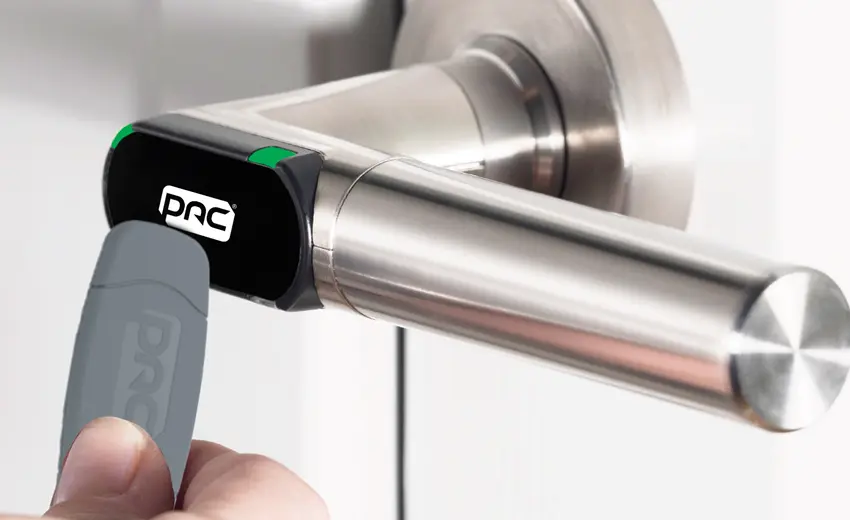
Comelit-PAC is set to transform the access control landscape with the introduction of PAC Lock, an innovative, fully integrated offline locking solution. This groundbreaking system empowers customers to seamlessly manage both wired and wireless doors from a single, intuitive platform: Access Central.
At the heart of PAC Lock lies the power of Open Security Standard (OSS) offline technology, now seamlessly integrated into the robust PAC ecosystem. This strategic adoption addresses a critical industry challenge, providing a practical, scalable, and cost-effective method to extend sophisticated access control into environments where traditional cabling or continuous online connectivity simply isn’t feasible.
David Hughes, Head of Product Management at Comelit-PAC, lauded PAC Lock as a pivotal advancement. “PAC Lock represents a significant step forward in the evolution of Access Central,” Hughes stated. “It empowers our partners and customers with unprecedented flexibility to secure an expanded range of doors, all without sacrificing system integrity or user experience.” He emphasized the strategic advantage of adopting the OSS protocol and leveraging their OPS credential across both online and offline environments, highlighting how this unified approach drastically simplifies configuration and daily operational management.
The intelligence behind PAC Lock resides within the secure PAC OPS credential. This advanced credential serves as a portable vault, meticulously storing user access permissions, critical event data, revalidation periods, and other essential security information.
Upon presentation to any PAC Lock device – be it an electronic cylinder, handle set, or cabinet lock – the device intelligently verifies access permissions locally. Crucially, it then writes the access event directly back onto the OPS credential itself.
This innovative ‘store and forward’ mechanism ensures that when the credential next interacts with an Access Central updating device, all collected events are seamlessly uploaded. These events are then instantly visible on the Access Central interface, either on the dedicated events screen or within standard reports. This ingenious system ensures that both online and offline doors are administered through a singular, cohesive interface, guaranteeing unparalleled consistency and ease of use for installers, administrators, and end-users alike.
True to its promise of unification, PAC Lock integrates flawlessly into the existing Access Central workflow. Offline locks are configured and managed using precisely the same intuitive process as their wired counterparts, encompassing everything from defining access groups and assigning credentials to managing revalidation schedules. This continuity is a significant boon for installers, who benefit from a familiar setup procedure, drastically reducing training requirements and streamlining deployment across even the most complex mixed installations.
Hughes concluded by reiterating the transformative potential: “The introduction of PAC Lock signifies that Access Central can now manage more doors, with greater efficiency, and across an even broader spectrum of environments. It stands as a powerful addition to the PAC range, unequivocally strengthening our position as a trusted technology partner for installers and end-users who demand flexible, future-ready access control solutions.”
The versatility of PAC Lock is truly remarkable, supporting an extensive array of locking formats. This includes state-of-the-art electronic cylinders, elegant handle sets, robust padlocks, and secure cabinet locks. This broad compatibility empowers integrators to precisely tailor solutions to diverse door types and specific usage patterns – from high-traffic main entrances demanding live online monitoring to interior zones where efficient standalone control is paramount.
