
 Check Port Open
 Disk Calculator
 Camera Calculator
 DMSS QR Generator and Decoder
 Super Password
 CCTV Quiz
 Facebook Profile Search

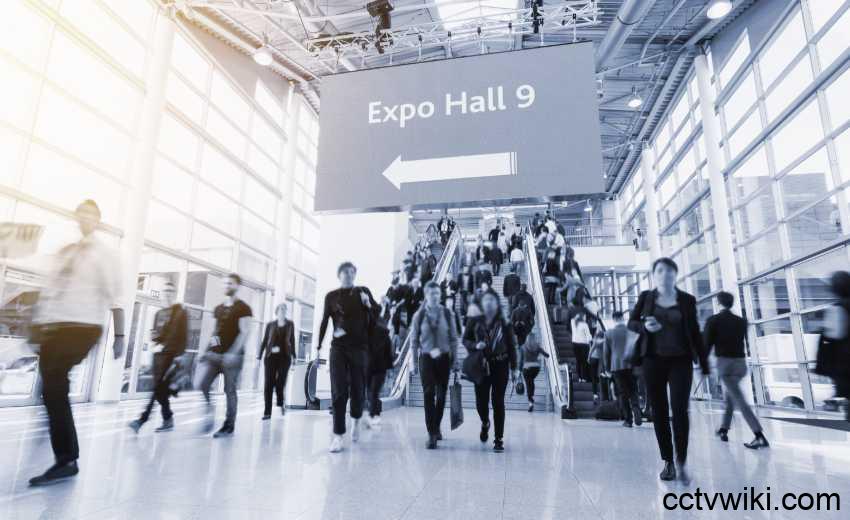
As exhibition venues worldwide embrace a new era of event density and operational complexity, their security paradigms are undergoing a profound transformation. What was once a collection of disparate functions is now evolving into a highly integrated, data-driven, and intensely operational model, a shift that presents both challenges and significant opportunities for physical security systems integrators and consultants.
At the heart of this evolution is the increasing demand for robust security architectures that seamlessly blend personnel, emergency response, centralized command, sophisticated video surveillance, advanced access control, thorough screening, and insightful post-event analysis. This holistic approach is crucial for managing the surging visitor flows and the intricate logistics of hosting multiple simultaneous events.
Dimitrios Donis, Head of the Operation & Security Center at Messe Frankfurt, offers a unique window into this changing landscape. His observations reveal how leading exhibition centers are proactively adapting their security strategies to navigate higher densities and growing operational complexity, setting new benchmarks for the industry.
Security is Becoming an Integrated Operating Model
Modern exhibition ground security extends far beyond the traditional roles of guards and cameras. It’s maturing into a comprehensive operating model that consolidates diverse safety and security functions into a singular, unified environment.
“Our security infrastructure has many facets: it includes our security personnel, a medical station with all the medical equipment needed for emergency care, and a fire and police station that is permanently staffed by up to four officers,” Donis explains, highlighting the multi-layered approach.
These critical elements are meticulously coordinated through the Operation & Security Centre (OSC), which acts as the central nerve center for the entire site. “This is also where the central control center is located, which is staffed 24 hours a day, 365 days a year,” he adds.
For integrators, this underscores a pivotal trend: end-users at large venues are increasingly seeking unified operational environments. These platforms are designed to facilitate continuous monitoring, accelerate coordination, and establish a clear command structure, essential for both routine operations and large-scale incidents. Donis notes the unique nature of their setup within the trade fair sector: “The OSC is unique in the trade fair industry. The permanently staffed police station is also only available at our exhibition center in Germany.”
Simultaneous Events Are Raising the Bar
A significant challenge for exhibition venues isn’t just the sheer scale of a single event, but the intricate logistics of hosting multiple events concurrently. Overlapping audiences introduce complex access patterns and exert immense pressure on entrances, circulation zones, and inter-hall connections.
“We are increasingly challenged by the growing number of events taking place simultaneously,” Donis states. “We therefore have to pay close attention to how we can best manage the flow of people on our premises and adapt our security infrastructure to this challenge.”
This dynamic environment has clear implications for system design. Integrators partnering with convention centers and public venues must think beyond static deployments, designing surveillance, access control, and staffing strategies that can flexibly support shifting occupancy conditions across the site throughout the day.
Standardized Planning Supports Event-Specific Security
While venues face recurring challenges, each exhibition demands a tailored, risk-based security plan. Donis details Messe Frankfurt’s standardized process for developing these event-level security concepts.
“All events held on the grounds and in the buildings of Messe Frankfurt are subject to a standardized process in order to derive an individual security concept for each event,” he affirms.
For consultants, this highlights the value of repeatable workflows that still allow for extensive customization. A structured process enables operators to consistently apply baseline measures while dynamically adapting staffing, controls, and monitoring protocols to the specific characteristics of each event. The core technologies remain foundational. “Video surveillance and access controls are used throughout our site,” Donis confirms. The crucial task for the channel, however, is not merely installing these systems but ensuring they actively support broader operational goals such as efficient people flow management, rapid incident response, and comprehensive event review.
Event Data is Shaping Future Deployments
A standout revelation from the interview is the strategic utilization of operational data to enhance future events. Rather than treating each exhibition as a standalone assignment, Messe Frankfurt meticulously analyzes post-event data to refine upcoming security deployments.
“We then use the data from the events to create an analysis in order to optimize our security measures for the next event,” Donis explains.
This forward-thinking approach mirrors a wider trend in physical security, where end-users increasingly expect systems to aid both real-time monitoring and proactive planning. Historical data—on visitor volumes, identified bottlenecks, and access activity—becomes invaluable for determining optimal staffing levels, configuring entry points, and anticipating potential pressure points for subsequent events. For integrators and consultants, this paradigm shift creates exciting opportunities to position security systems as powerful tools for operational improvement, not just protection.
Layered Security is Expanding
Donis also highlighted the implementation of an additional protective layer at the venue. “In addition to the above measures, we have also been using metal detectors since last year to achieve the highest possible level of security,” he reveals.
This strategic move reinforces the industry-wide adoption of layered security strategies at public venues. Video surveillance, sophisticated access control, trained personnel deployment, and physical screening are increasingly integrated to form a cohesive defense, rather than being deployed as isolated measures. This also introduces practical integration considerations: screening systems must seamlessly merge into entrance operations without causing unacceptable delays, making throughput efficiency and layout planning as critical as the detection technology itself.
Peak-Load Handling Depends on Planning and Staffing
Major exhibitions invariably generate sharp surges in traffic at specific entrances or during peak times. Donis emphasizes the central role of historical event data in preparing for these demand spikes.
“We use visitor numbers and data from the previous event to get an accurate picture of the upcoming event,” he elaborates. “In the past, we have built our security infrastructure on this visitor data, for example for individual exhibition days and times.”
This meticulous planning has demonstrably enabled the venue to manage busy periods effectively. “We were able to cope with peak loads without any problems by deploying sufficient staff and access controls at our entrances and access gates,” Donis proudly states. For consultants, this serves as a powerful reminder that even in technologically advanced environments, successful security scaling remains fundamentally dependent on operational readiness. While cutting-edge hardware is essential, equally vital are optimal staffing levels, precise deployment timing, and the ability to align controls with actual traffic patterns.
Cybersecurity Remains Part of the Wider Picture
While the interview primarily focused on physical operations, Donis was keen to stress the integral role of cybersecurity and data protection within the venue’s broader system environment.
“Cyber security at Messe Frankfurt is handled by experienced IT colleagues. We are also very well positioned in this area,” he confirms. He further notes that for the venue’s core system landscape, “we rely on a German manufacturer, SAP, which guarantees German and European standards for IT security and data protection.” For physical security professionals, this underscores the imperative for closer coordination with IT teams, particularly in large venues where security platforms increasingly converge with broader digital infrastructure and stringent compliance requirements.
AI and OSINT May Define the Next Phase
Looking to the future, Donis anticipates a significant increase in the use of artificial intelligence (AI) and open-source intelligence (OSINT) tools in exhibition security.
“In future, there will be more AI, for example to manage visitor flows in the best possible way, detect anomalies at an early stage or enable image recognition,” he predicts. He adds, “The use of open source intelligence (OSINT) tools will become more important. These are tools for the systematic collection and evaluation of publicly available information so that large amounts of data and information can be analyzed quickly.”
For integrators and consultants, these insights point to the imminent next stage of venue security evolution. AI is being viewed not merely as an analytics feature but as a practical, actionable tool for dynamic crowd management, proactive anomaly detection, and accelerated operational decision-making. OSINT, meanwhile, suggests that venue security will increasingly draw upon intelligence sources beyond purely on-site systems, incorporating external data for enhanced situational awareness.
The overarching direction is clear: exhibition venue security is transitioning towards models that are more integrated, more analytical, and acutely focused on managing dynamic visitor flows across increasingly complex sites. For the channel, this translates into a growing demand for advanced systems that facilitate coordinated, holistic operations rather than isolated, functional silos.
