
 Check Port Open
 Disk Calculator
 Camera Calculator
 DMSS QR Generator and Decoder
 Super Password
 CCTV Quiz
 Facebook Profile Search

As International Data Protection Day approaches on January 28, Genetec, a global vanguard in enterprise physical security software, is stepping forward to equip organizations with crucial best practices. Their mission: to empower businesses to robustly protect sensitive physical security data without compromising operational effectiveness.
Modern physical security systems are veritable data factories, continuously generating vast quantities of information—from detailed video footage and precise access control logs to critical license plate data. This ever-growing data trove, essential for daily operations and investigative efforts, places immense pressure on organizations to manage it with paramount responsibility. This challenge is amplified by a landscape of evolving privacy regulations, escalating cyber threats, and a public increasingly demanding transparency.
“Physical security data is inherently sensitive, demanding far more than rudimentary safeguards or ambiguous promises,” states Mathieu Chevalier, Principal Security Architect at Genetec Inc. Chevalier cautions against market approaches that view data primarily as an exploitable asset, frequently shared beyond its initial intent, which he identifies as a significant source of privacy risk. “Organizations deserve clear boundaries on data usage, robust controls across its entire lifecycle, and technology meticulously engineered to prioritize privacy by default, rather than as a secondary consideration.”
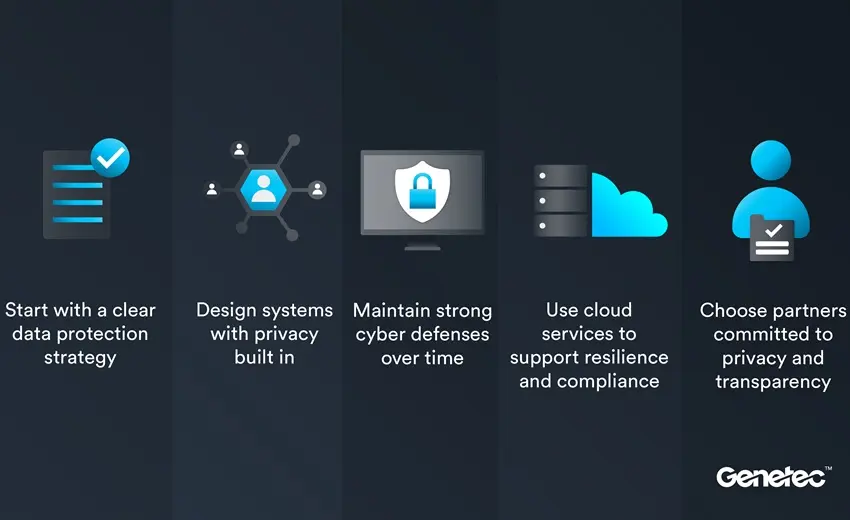
International Data Protection Day, observed annually on January 28, serves as a vital reminder of our collective and continuous responsibility to safeguard personal data. For physical security professionals, navigating this complex terrain requires a strategic blend of clear methodologies, resilient technological infrastructure, and dependable partnerships. These elements are crucial for ensuring that privacy and security objectives remain synchronized amidst an ever-shifting landscape of risks and regulatory frameworks. To empower organizations in fortifying data protection across their physical security ecosystems, Genetec proudly offers the following indispensable best practices:
Cultivate a Robust Data Protection Strategy
The bedrock of any secure system is a meticulously defined data protection strategy. Organizations must conduct regular, comprehensive assessments of the data they gather: understanding its precise purpose, its storage location, retention periods, and who precisely has authorized access. Meticulously documenting these practices is not merely an administrative task; it is a critical safeguard that minimizes unnecessary data exposure, swiftly identifies potential policy vulnerabilities, and ensures ongoing compliance as regulatory landscapes continually evolve. Furthermore, an unwavering commitment to transparency in data handling is paramount, fostering essential trust among employees, customers, and the wider public.
Engineer Systems with Privacy-by-Design at Their Core
True data protection begins at the architectural level. Privacy-by-design dictates that privacy risks are mitigated not solely through reactive security controls, but fundamentally through the very methods by which personal data is collected, utilized, and governed. Organizations are urged to rigorously apply principles of purpose limitation and data minimization, ensuring that only the essential data required for clearly defined security objectives is ever collected and subsequently retained. This proactive approach is complemented by deploying stringent security measures, including robust encryption for data both in transit and at rest, mandating powerful authentication protocols, and implementing granular access controls to drastically reduce the potential for unauthorized entry. Beyond these, privacy-enhancing technologies like automated anonymization and data masking elevate transparency, diligently shielding individual identities while crucially preserving the invaluable operational utility of security data.
Sustain Vigorous Cyber Defenses Continuously
Data protection is not a one-time endeavor; it is an incessant, evolving commitment. Essential to this continuous process are regular system hardening, proactive vulnerability management, and the unwavering application of timely updates to confront new cybersecurity risks as they inevitably surface. By embedding privacy and cybersecurity as perpetual operational responsibilities, organizations can cultivate and maintain an inherently stronger, more resilient overall security posture.
Leverage Cloud Services for Enhanced Resilience and Compliance
Embracing cloud-managed and Software-as-a-Service (SaaS) deployments offers a strategic advantage, enabling organizations to effortlessly remain current with the latest security patches, privacy controls, and compliance features. This approach simultaneously alleviates significant operational burdens on internal teams. A growing number of enterprises are now adopting flexible deployment models, masterfully balancing the demands of scalability, granular control, and stringent data residency requirements across both on-premise and cloud-based environments.
Select Partners Dedicated to Privacy and Transparency
The selection of technology partners is a pivotal decision. Organizations must meticulously evaluate vendors based on their governance of personal data, the clarity of their data usage limitations, and the transparency of their privacy practices. Crucial assurances can be gleaned from adherence to independent security standards and attestations, such as ISO/IEC 27001, ISO/IEC 27017, and SOC 2 Type II reports, which meticulously detail how systems and data are protected and managed, thereby significantly mitigating privacy risks stemming from unauthorized access or misuse. Furthermore, it is imperative to scrutinize vendors’ vulnerability disclosure processes, their overarching data governance methodologies, and their philosophical approach to developing and deploying artificial intelligence, particularly ensuring a steadfast prioritization of transparency, safety, and human-led decision-making when personal data is implicated.
For comprehensive best practices on building a robust data protection strategy for physical security systems, visit https://www.genetec.com/trust-cybersecurity
