
 Check Port Open
 Disk Calculator
 Camera Calculator
 DMSS QR Generator and Decoder
 Super Password
 CCTV Quiz
 Facebook Profile Search

ONVIF, a leading open industry forum dedicated to standardizing interfaces for security device interoperability, recently announced a significant knowledge partnership with Secutech, one of Asia’s longest-running and most influential security exhibitions held annually in Taipei.
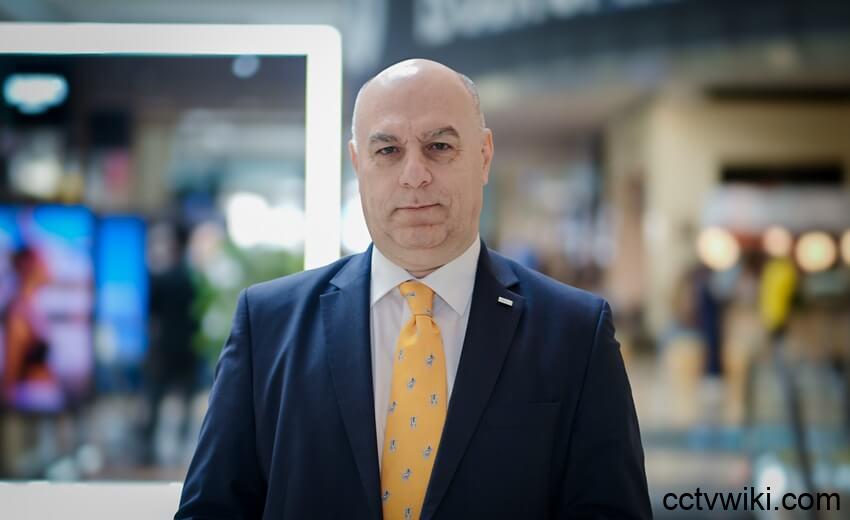
We had the exclusive opportunity to sit down with Roberto Licari, ONVIF Ambassador and a seasoned security consultant boasting over three decades of industry expertise. Our discussion spanned a wide array of critical topics, from the foundational aspects of this new partnership to the complex challenges of standardization in the rapidly evolving age of Artificial Intelligence.
ONVIF’s Strategic Presence at Secutech Taipei
**asmag.com:** ONVIF will be a Knowledge Partner at next year’s Secutech. What key message do you plan to convey to the professionals gathering at one of APAC’s foremost security shows?
**Roberto Licari:** In an increasingly complex technological landscape, open standards are more crucial than ever. Today’s security installations integrate sophisticated AI analytics, cloud services, and a multitude of IoT devices. It is standardized interoperability that ensures all these disparate components function seamlessly and reliably together. ONVIF’s fundamental role is to provide a robust foundation of tested interoperability, enabling new developments to thrive while offering end-users genuine choice and safeguarding their existing investments.
Our presence at Secutech Taipei underscores our unwavering commitment to the APAC security community. We aim to help professionals grasp how multi-vendor systems can effortlessly integrate and adapt as new technologies emerge. This partnership also empowers manufacturers in the region to leverage our globally adopted standards, facilitating easier access to international markets.
**asmag.com:** What specifically led ONVIF to select Secutech for this pivotal Knowledge Partnership?
**Roberto Licari:** Secutech Taipei grants us direct access to one of the world’s most dynamic security markets. The APAC region stands as a vanguard in security technology adoption, particularly in ambitious smart city initiatives and large-scale integrated deployments where interoperability is paramount.
Taiwan and the broader APAC region are home to numerous ONVIF member companies and account for a substantial portion of global security manufacturing. As a Knowledge Partner, we can directly engage with the manufacturers, integrators, consultants, and end-users who are actively shaping the future of physical security. The show’s strong emphasis on interoperability and innovation perfectly aligns with our mission: to provide standardization that fosters technological advancement rather than constraining it.
Addressing Video Integrity in the Age of AI
**asmag.com:** Who will represent ONVIF at Secutech, and what can visitors expect to hear in your presentation?
**Roberto Licari:** As Knowledge Partner, we will seize the opportunity to address the audience on the critical issue of video integrity – a paramount concern in video security today. The fundamental question is: how can you definitively confirm that surveillance footage has not been tampered with?
This is no longer a hypothetical worry. With the accelerating sophistication of AI-generated content, the authenticity of recorded video holds immense weight – whether for security operations, investigations, or any legal proceedings. Our presentation will delve into the ONVIF video authentication specification, which empowers cameras to cryptographically sign footage directly at the point of capture. This unique signature travels with the video, enabling verification at any downstream point that the content being viewed is precisely what the camera originally recorded. We will provide a comprehensive walkthrough of its mechanics, elucidate why signing at the camera level is so vital, and explain its practical implications for end-users who rely on irrefutable video evidence.
Attendees will also gain further insight into the ONVIF organization and our comprehensive portfolio of standards across various security domains:
- Video Surveillance – Profile T and Profile G facilitate standardized streaming, imaging, and edge recording across cameras and video management systems from diverse manufacturers.
- Metadata and Events – Profile M delivers standardized metadata exchange and event handling, including MQTT messaging capabilities for efficient communication between devices and management platforms.
- Access Control – Profile A, Profile C, and Profile D ensure standardized communication for door controllers, credential readers, and integrated security management platforms.
ONVIF’s Role in a Post-AI World
**asmag.com:** Many exhibitors are heavily focused on AI R&D, including AI-enhanced image processing. How does ONVIF envision its role in preserving the integrity of image and other data as AI itself introduces new challenges?
**Roberto Licari:** As AI capabilities expand, the need for a trustworthy underlying foundation becomes exponentially more critical. For ONVIF, this translates into a two-pronged approach: protecting the integrity of the source data that AI systems analyze, and standardizing the structure of AI-generated insights to ensure their utility across diverse platforms.
On the metadata front, we are actively standardizing how AI-generated analytics are expressed. This ensures that intelligence can traverse different systems without losing its meaning or vital context. As AI produces increasingly complex outputs – such as object classification, behavioral analysis, or sophisticated scene interpretation – standardized metadata prevents these invaluable insights from becoming isolated within a single vendor’s ecosystem.
The overarching principle remains consistent with our historical mission: to empower the industry to innovate while providing the essential interoperability framework that makes innovation deployable at scale. AI is no exception. Our goal is a security ecosystem where AI capabilities and open standards mutually reinforce each other, rather than diverging.
**asmag.com:** Interoperability and collaboration are foundational to ONVIF’s mission. How do you actively work with members and partners to ensure the future-readiness of ecosystems in video security and related fields like automation and IoT?
**Roberto Licari:** ONVIF was established to support the industry, creating interoperability pathways for current challenges. However, we also bear the responsibility of anticipating the industry’s trajectory, all while maintaining compatibility with existing installations. We rely heavily on our 500 member companies – comprising manufacturers, software developers, and integrators – to collaborate on developing profiles that address today’s pain points and, crucially, support future needs as much as possible.
Our ongoing standard development for cloud connectivity will define how devices authenticate, stream, and record video. This is increasingly vital as more cloud vendors enter the market with proprietary interfaces. Our existing Profile M not only enables metadata handling for basic analytics but also provides a clear pathway to building automation through connections into IoT systems. Furthermore, a new audio profile currently under development within ONVIF will extend this interoperability into the burgeoning IP audio market.
Like the industry itself, we are moving beyond traditional security paradigms. Smart cities, for instance, demand seamless integration of video, audio, access control, building automation, and IoT sensors. ONVIF is proactively developing specifications that connect these disparate areas, fostering true system-level interoperability that will drive both innovation and stability for the future.
