
 Check Port Open
 Disk Calculator
 Camera Calculator
 DMSS QR Generator and Decoder
 Super Password
 CCTV Quiz
 Facebook Profile Search

The landscape of security is rapidly evolving, driven by an escalating demand for sophisticated access control systems across diverse sectors. These systems are the gatekeepers of physical resources, meticulously validating user credentials through a spectrum of technologies—from traditional proximity and smart cards to advanced biometrics like fingerprint, iris, and facial recognition, complemented by electronic locks and robust security management software. Every industry, whether safeguarding sensitive data, protecting valuable assets, or ensuring personnel safety, relies on tailored security protocols to identify intruders and restrict access to critical areas.
Modern access control architecture boasts a comprehensive array of authentication systems, including multi-technology readers and a robust suite of biometric options. From the venerable magnetic stripe cards to cutting-edge facial recognition, these technologies underpin secure entry. Electronic locks, in particular, offer a cost-effective solution for automating entrance systems, broadening accessibility.
The access control market is on the cusp of significant expansion, fueled by several key drivers. The increasing adoption of Access Control as a Service (ACaaS), the burgeoning implementation of mobile-based access control, rapid urbanization in emerging economies, and the global surge in smart city initiatives are all poised to create immense growth opportunities. Mobile-based access control simplifies identity management by seamlessly merging physical access control (PAC) and IT security into a single, unified system, enabling smartphones to serve as secure credentials for accessing buildings, doors, and IT infrastructure.
Nations like India, China, Brazil, Indonesia, Mexico, and South Africa are experiencing unprecedented urbanization and the proliferation of smart cities. This concentrated industrial development naturally escalates the demand for advanced infrastructure, which, in turn, spurs the need for sophisticated biometric solutions and smart locks.
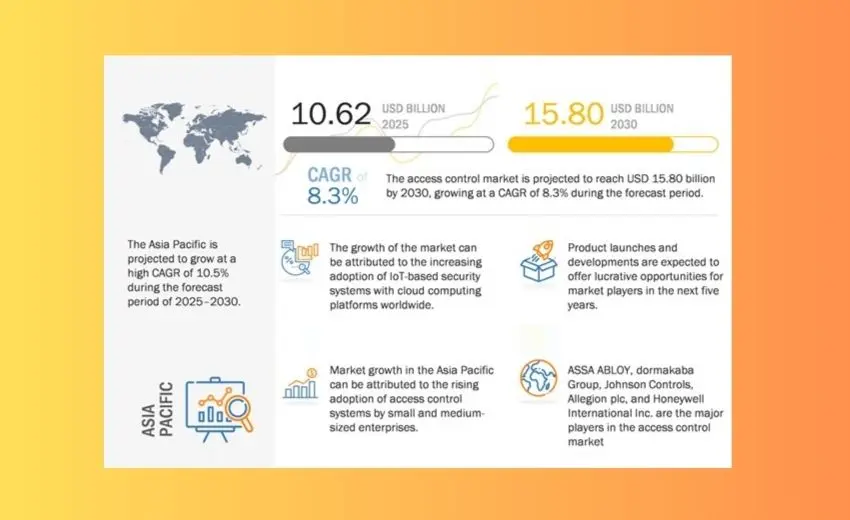
According to a comprehensive report by MarketsandMarkets, the global access control market, valued at an estimated USD 10,117.1 million in 2024, is projected to soar to USD 15,795.7 million by 2030, exhibiting a robust Compound Annual Growth Rate (CAGR) of 8.3% during this forecast period. This growth is intrinsically linked to rising global awareness of smart home technology benefits. Property operators and multifamily owners are increasingly integrating advanced building access controls. Recent technological breakthroughs have dramatically expanded the functionality of security systems, offering unparalleled flexibility, convenience, and enhanced safety for consumers.
These intelligent systems provide real-time alerts to users’ mobile devices, notifying them of intrusions, fires, or smoke around their properties, thereby offering an additional layer of protection for residents, employees, and assets. Beyond mere security, residential access control systems often integrate home automation features. Within larger organizations, access control systems can be standardized or customized, adapting to varying security levels and organizational scale.
A noticeable trend is the growing consumer preference for do-it-yourself (DIY) home security systems. These user-friendly systems, easily installed and monitored by homeowners, are gaining traction due to their simplicity, high reliability, and affordability. The surge in consumer awareness is also amplified by complementary markets, notably telecommunications and insurance. Telecom giants, with their vast residential customer bases already subscribed to internet and cable services, are entering the home security arena, strategically targeting opportunities fueled by evolving demographics and technological advancements. Furthermore, numerous insurance companies incentivize homeowners with attractive discounts for installing integrated access control systems, helping offset initial adoption costs through reduced premiums.
Increasing awareness about home security and growing implementation of mobile-based access control to drive market
The advent of smart infrastructure is forging a powerful ecosystem where the digital and physical worlds converge. Data-driven analytics empower users to make informed decisions regarding access and permissions, leading to more efficient and sustainable operations within buildings. Recognizing the inherent cyber threats to this interconnected infrastructure, the European Union Agency for Cybersecurity (ENISA) provides essential guidance, emphasizing best security practices and offering recommendations for operators and manufacturers. Smart infrastructure encompasses diverse domains, including smart cities, smart homes, hospitals, and smart grids.
Smart cities, by their very nature of being digitally interconnected, face unique security challenges. Pioneering initiatives such as Barcelona Smart City, Singapore’s Smart Nation Initiative, South Korea’s Songdo International Business District, and Amsterdam Smart City stand as testaments to how urban centers worldwide are leveraging connected infrastructure and advanced access control technologies. These projects aim to enhance sustainability, mobility, and the overall citizen experience. However, the reliability of data from Internet of Things (IoT) sensors, citizens, and other devices hinges entirely on the security and verification of their sources.
This underscores the critical necessity for stringent access control across all vital components of urban life – transportation systems, residential buildings, commercial offices, manufacturing plants, educational institutions, healthcare facilities, and other community services. To function effectively, smart cities demand robust remote access capabilities, mobile applications, and web-based access options.
Access control services are indispensable in smart buildings, where constant vigilance is paramount. They are not only crucial for maintaining security but also for managing traffic flow within facilities and preventing unauthorized entry into protected zones. The omnipresent threat of security breaches is a primary driver for the adoption of Access Control as a Service (ACaaS), propelling the smart infrastructure market forward.
Value chain of access control market
Physical access control systems are designed to precisely govern who, when, and where individuals can enter or exit an authorized area. Unlike rudimentary locks and keys, which merely restrain unauthorized entry but offer no audit trail, modern systems provide comprehensive intelligence. These sophisticated setups integrate hardware and software components, from control locks and devices to advanced management tools, to orchestrate access within commercial and industrial facilities, offices, and operational sites. They seamlessly combine various electronic access control locks, devices, and systems with intuitive management interfaces to meticulously control access.
Crucially, modern physical access control systems leverage credentials such as key fobs, keycards, or mobile credentials to record vital data, including the precise time and date of every access attempt – both granted and denied. This robust logging capability facilitates future reference and enables dynamic access permissions based on credential profiles. When access is granted, the door momentarily unlocks, and the event is logged; if denied, the door remains secured, and the attempted access is recorded for security analysis. A notable player in this segment, DOM Sicherheitstechnik (Germany), is renowned for manufacturing innovative locking devices, electronic access systems, and security hardware, supported by an extensive network of subsidiaries and partners.
Technology analysis
The access control market is undergoing a rapid transformation, propelled by breakthroughs in core technologies such as biometric authentication, mobile access solutions, and cloud-based access control systems. These innovations are significantly enhancing security, scalability, and user convenience. Complementary technologies, including sophisticated video surveillance integration and visitor management systems, are increasingly being adopted to forge unified, intelligent security ecosystems. Furthermore, adjacent technologies like the Internet of Things (IoT), smart building platforms, and advanced cybersecurity frameworks such as zero-trust security are redefining access control, evolving it from standalone systems into integral components of connected, secure, and adaptive infrastructure environments.
Key technologies
- Biometric authentication
Biometric authentication stands as a cornerstone technology in the access control market, offering an exceptionally secure and convenient alternative to traditional methods like passwords, PINs, or physical keycards. By leveraging unique biological traits—be it fingerprints, facial recognition, iris patterns, or voice—biometric systems deliver an unparalleled level of identity verification that is incredibly challenging to forge or duplicate. This capability is paramount for enterprises, government facilities, and high-security environments, where protecting sensitive assets and ensuring authorized access is non-negotiable. Moreover, biometric solutions boost operational efficiency by reducing the reliance on physical tokens and streamlining user management.
The adoption of biometric technologies is further accelerated by advancements in AI, machine learning, and seamless mobile integration, leading to faster, more accurate, and highly scalable identification systems. Cloud-based biometric platforms empower organizations with centralized management, real-time monitoring, and advanced analytics, thereby creating smarter and more responsive security ecosystems. As organizations increasingly prioritize compliance, auditability, and a frictionless user experience, biometric authentication continues to drive innovation and differentiate offerings in the access control market, solidifying its position as a key growth enabler.
- Mobile access technologies
Mobile access technologies empower users to unlock doors, gates, or secure systems effortlessly using their smartphones, tablets, or wearable devices, effectively replacing traditional keys or cards. These technologies typically rely on secure communication protocols such as Bluetooth Low Energy (BLE), Near Field Communication (NFC), Wi-Fi, or cloud-based credentials to interact with access control systems. Mobile access delivers unparalleled convenience, significantly reduces the need for physical tokens, and enables real-time credential management, allowing for immediate granting of temporary access or instantaneous revocation of permissions.
Furthermore, mobile access solutions seamlessly integrate with enterprise security platforms and biometric authentication features (e.g., fingerprint or facial recognition on the device itself) to fortify security. Cloud-based mobile access extends capabilities to centralized monitoring, usage analytics, and effortless scalability across multiple sites. As organizations increasingly seek flexible, user-friendly, and cost-effective solutions, mobile access is experiencing widespread adoption across offices, residential complexes, healthcare facilities, and industrial environments, positioning it as a pivotal growth driver for the access control market.
- Cloud-based access control (ACaaS)
Access Control as a Service (ACaaS) represents an innovative access control model where the entire management, storage, and operation of access credentials are hosted securely on the cloud, rather than requiring cumbersome on-premises servers. This model enables organizations to remotely manage doors, users, and access policies via intuitive web or mobile applications, eliminating the need for heavy local infrastructure investments. ACaaS offers inherent scalability, rapid deployment capabilities, and automatic software updates, making it an ideal solution for multi-site enterprises or organizations demanding flexible and dynamic access management.
Beyond operational efficiency, ACaaS provides enhanced security and analytics by leveraging powerful cloud computing capabilities. Real-time monitoring, comprehensive usage logs, and detailed audit trails are accessible from anywhere, while AI-driven insights proactively help detect unusual activity or potential security breaches. By significantly reducing upfront hardware costs and simplifying operational complexity, cloud-based ACaaS is emerging as the preferred solution for enterprises seeking cost-effective, scalable, and intelligent access control systems, thereby driving substantial growth within the access control market.
Complementary technologies
- Video surveillance integration
Video surveillance integration involves the strategic combination of access control systems with CCTV or IP-based video monitoring to dramatically enhance security and situational awareness. When an individual attempts to access a secure area, the integrated system can automatically trigger video recording or live streaming, providing real-time visual verification of identity and activity. This powerful integration enables security teams to directly correlate access events with visual evidence, significantly improving incident response times, strengthening audit trails, and ensuring compliance.
By merging access control with video surveillance, organizations gain proactive security capabilities, such as automated detection of tailgating, unauthorized entry attempts, or suspicious behavior. Advanced systems leverage AI and video analytics to automate alerts and identify anomalies, fostering a smarter, more efficient security ecosystem. As enterprises and critical facilities increasingly prioritize holistic security approaches, video surveillance integration has become a key complementary technology, substantially enhancing the value and effectiveness of access control solutions.
- Visitor management systems (VMS)
Visitor Management Systems (VMS) are designed to streamline and secure the process of managing guests, contractors, or temporary personnel within an organization. When seamlessly integrated with access control, VMS enables efficient pre-registration, robust identity verification, quick badge issuance, and comprehensive tracking of visitors throughout their stay. This ensures that only authorized individuals gain entry while maintaining detailed logs for compliance and audit purposes. Modern VMS solutions often incorporate digital workflows, self-service kiosks, and mobile notifications, significantly improving both operational efficiency and the visitor experience. When combined with access control, biometric authentication, and video surveillance, VMS forms a crucial component of a holistic security ecosystem, enhancing situational awareness, mitigating risks, and effectively supporting enterprise-level security policies.
Adjacent technologies
- IoT and smart building platforms
IoT and smart building platforms facilitate the interconnectedness of various devices and systems, such as lighting, HVAC, elevators, and security, allowing them to communicate and operate cohesively. In the realm of access control, these platforms enable real-time monitoring and automated responses based on occupancy levels, time schedules, or specific security events. For instance, granting access to a particular area can trigger automated lighting adjustments or climate controls, thereby creating an integrated, energy-efficient, and secure environment.
By integrating access control with IoT and smart building platforms, organizations achieve enhanced operational efficiency, predictive maintenance capabilities, and data-driven insights. These platforms support centralized management, advanced analytics, and automation, empowering enterprises to optimize both security and overall facility management. As buildings become increasingly smarter and more connected, IoT-enabled access control is rapidly being recognized as a critical component of modern, intelligent infrastructure.
- Cybersecurity and zero trust security
Cybersecurity and zero trust security principles play an increasingly critical role in modern access control systems, particularly as these systems become more digital, cloud-based, and mobile-enabled. Zero trust operates on the foundational principle of “never trust, always verify,” ensuring that every user, device, or application is continuously authenticated and authorized before gaining access to resources. This stringent approach significantly reduces the risk of unauthorized access, data breaches, and lateral movement within networks.
Integrating zero trust and robust cybersecurity measures with access control enhances data protection, strengthens threat detection, and ensures compliance. Features such as multi-factor authentication, encrypted communication, and real-time monitoring fortify both physical and digital security postures. As organizations increasingly adopt hybrid workplaces, leverage cloud services, and build IoT-enabled infrastructure, cybersecurity and zero trust frameworks serve as essential adjacent technologies, ensuring that access control remains resilient against evolving cyber and physical threats.
