
 Check Port Open
 Disk Calculator
 Camera Calculator
 DMSS QR Generator and Decoder
 Super Password
 CCTV Quiz
 Facebook Profile Search

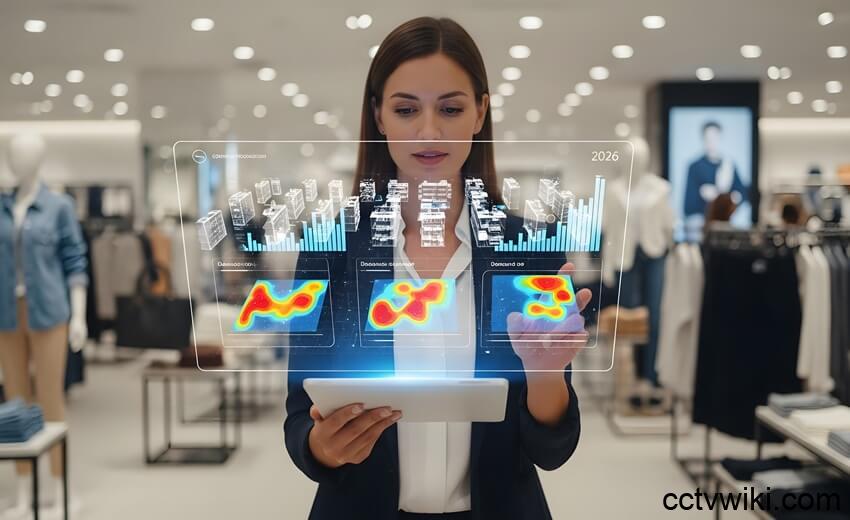
Heatmaps have emerged as indispensable business intelligence tools for retailers, offering a visual roadmap to customer behavior and store performance. While the market boasts a diverse array of heatmap solutions, each with its unique capabilities, it’s the systems integrator (SI) who truly orchestrates their full potential. SIs are crucial in ensuring these sophisticated tools are not only flawlessly installed but also precisely aligned with a retailer’s specific needs and strategic objectives.
Heatmaps transform complex data into intuitive visuals, allowing retailers to pinpoint “hot” zones where customers congregate and “cold” spots that are underperforming. Armed with this insight, businesses can optimize merchandising strategies and staff allocation. As retailer demands grow more intricate, solution providers continually innovate, pushing the boundaries of what heatmaps can deliver.
Milesight, for instance, harnesses its proprietary edge AI technology to power a sophisticated heatmapping solution. This capability extends across its key product lines, including the 360° Panoramic Fisheye Network Camera and the AI TrueColor Q Series Camera (Dome/Bullet/Turret). The company’s track record is rich with success stories, demonstrating the tangible benefits of its solution.
“In a project with Coo & Riku, Japan’s largest pet store chain, Milesight’s heatmapping supported layout optimization and staffing decisions, contributing to a 10 percent increase in sales in key areas, a 15 percent improvement in customer satisfaction, and ROI achieved within six months, all while maintaining a stable and reliable system for daily operations,” shared Angel Cai, Marketing Manager at Milesight.
Similarly, SCATI empowers heatmapping through its SCATI EYE Intelligent Series, which integrates advanced analytics directly at the edge. “Our retail heatmapping is positioned as a practical tool to help managers identify the most visited areas of a store and support decisions that improve store performance and resource allocation,” explained Tamer Mohannad, Regional Sales Manager for Middle East and Africa at SCATI. “What differentiates SCATI’s approach is that heatmaps are not presented as an isolated graphic, but as part of a broader model where video and analytics contribute to operational management and decision-making.”
Koen de Jong, Founder and CEO of Visionplatform AI, elaborated on their solution, which forms part of a comprehensive vision intelligence platform. “The company does not position heatmaps as standalone dashboards, but as one signal layer in a larger decision-making system within Milestone XProtect, partnering with Conexao with their O’insights product,” he stated. “Our solution stands out because it works with existing security cameras fully on-premise; combines heatmapping with object detection, dwell analysis, and behavior context; outputs structured data that can trigger workflows, reports, or alerts; and is designed for both retail operations and security teams. Our customers use heatmapping not only to analyze stores but to automate responses, such as staffing alerts or congestion warnings.”
V-Count offers another robust heatmap solution, integrating their Nano Prime stereo image-based people counter sensor with their BoostBI analytics platform on Google Cloud. “This way the solution delivers high-fidelity heatmaps, visitor flows, and dwell vs. conversion data without recording or storing video, ensuring full GDPR compliance,” affirmed Pritam Dey, Sales Manager for Middle East and APAC at V-Count.
The Indispensable Role of Systems Integrators
While an abundance of heatmap solutions fills the market, the systems integrator is truly the lynchpin in unlocking their profound potential. Let’s delve into how SIs empower users to maximize the value derived from their heatmap investments.
Mastering the Fundamentals
First and foremost, the integrator must ensure all foundational elements are meticulously addressed: cameras are strategically positioned, every area requiring monitoring is covered, and all necessary technical infrastructure is in place.
“Integrators deliver the greatest value when they approach heatmapping as a structured measurement project rather than a visual add-on,” Mohannad advised. “The first step is to design the deployment around the intended use case and ensure the technical foundations are correct: selecting cameras suitable for analytics, defining adequate top-down coverage, validating lighting and occlusions, and properly calibrating the measurement zones. Without the appropriate capture conditions, heatmaps may lead to inconsistent conclusions; with a correct design, they become a stable source of insight.”
Defining Clear Objectives
Another critical responsibility for the SI is guiding the user in establishing precise objectives. The retailer’s goals and what they aim to achieve with the heatmap data must be unequivocally defined. As de Jong aptly puts it, “The biggest failures happen when heatmaps are deployed without a clear operational use case.”
Mohannad echoed this sentiment, emphasizing, “Beyond deployment, the key is to… define which indicators will be monitored, who will review them, how frequently, and what actions will follow (layout adjustments, staffing reinforcement during peak periods, queue mitigation, or targeted supervision of sensitive areas). In SCATI environments, integrators can also unlock more value by ensuring heatmapping data is aligned with the broader analytics ecosystem and can be exploited through business intelligence workflows where applicable.”
Expert Data Interpretation and Seamless Integration
Integrators further enhance value by supporting data interpretation. “They can help retailers translate the results into practical actions rather than treating them as static visuals,” Cai noted. “Over time, encouraging retailers to review the data regularly – especially before and after layout or operational changes – helps embed heatmapping into ongoing store optimization, rather than using it as a one-time analysis tool.”
For optimal effectiveness, heatmap data must be seamlessly integrated with other systems. A prime example is heatmap-POS (point of sale) integration, which provides retailers with a crystal-clear understanding of whether heavy foot traffic or extended dwell times truly translate into actual sales. Here again, the SI plays a pivotal role.
“What SIs need to do is categorize data in terms of sales and transactions, so as to help the user get an overall idea of whether customers visiting a certain zone are converting those visits into real buys or not,” Dey elaborated. “The main goal is to increase sales, right? So in order to do that, you have to get the data from the heatmapping sensors or the system and back it up with the sales data. So if the SI can help the user figure out what is the real picture… I think that’s one way to unleash the heatmap’s full potential.”
