
 Check Port Open
 Disk Calculator
 Camera Calculator
 DMSS QR Generator and Decoder
 Super Password
 CCTV Quiz
 Facebook Profile Search

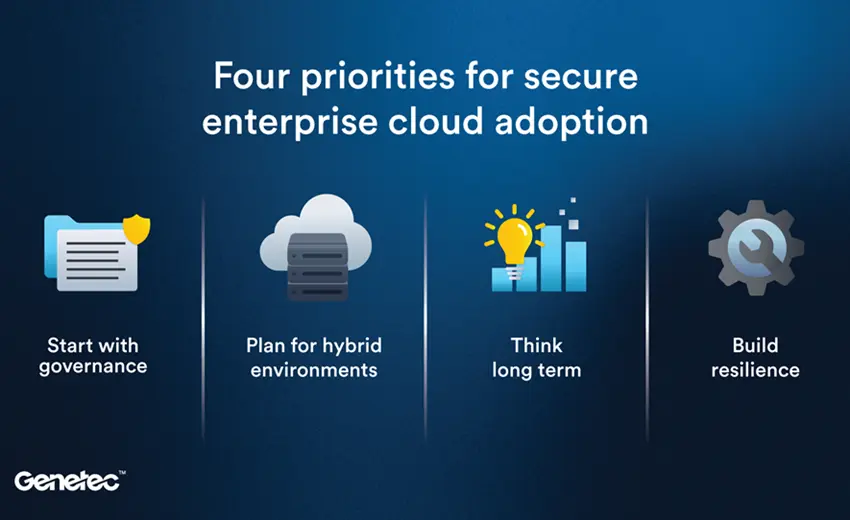
As the world marked Cloud Security Day on April 3rd, Genetec, a global leader in enterprise physical security software, issued a critical call to action: enterprises must re-evaluate their cloud adoption strategies. The company underscored a significant disconnect between prevalent cloud models in physical security and the stringent governance, risk management, and operational demands inherent to large organizations.
For enterprises managing vast, multi-site operations, adhering to complex regulatory frameworks, and navigating evolving cybersecurity threats, a ‘simple move to the cloud’ is rarely sufficient. Such models often fail to account for infrastructure designed to operate reliably for years, potentially undermining flexibility and long-term resilience.
“Enterprise physical security rarely fits a singular deployment mold; our cloud strategies must mirror that complexity,” stated Francis Lachance, Senior Director of Product at Genetec Inc. “Large organizations inherently run parallel cloud, on-premises, and hybrid environments. Their systems require seamless interoperability across all these platforms to maintain robust governance, comprehensive visibility, and unwavering control over infrastructure built for enduring performance.”
Enterprises Choose Hybrid-Cloud for Resilience, Not Just Simplicity
The notion that cloud adoption is merely about ease of use is challenged by recent findings from the Genetec 2026 State of Physical Security Survey. Polling over 7,300 respondents, the survey reveals that hybrid-cloud adoption is a deliberate, strategic decision rooted in profound long-term operational needs:
- A significant **39%** of enterprises identified scalability as a primary driver for embracing hybrid-cloud environments.
- Crucially, **38%** cited redundancy as a key motivator, underscoring a strong organizational focus on enduring resilience and business continuity.
Lachance elaborated, “For today’s enterprises, the cloud isn’t just a destination; it’s an operating model that must adeptly navigate relentless operational, regulatory, and threat landscapes. The ultimate objective isn’t a wholesale shift to ‘cloud-only,’ but rather the strategic adoption of cloud capabilities in ways that rigorously uphold governance and ensure uninterrupted continuity over time.”
Put Governance at the Center of Cloud Decisions
At the scale of an enterprise, cloud adoption must be fundamentally guided by accountability, not solely by convenience. This dictates that critical considerations such as cybersecurity, regulatory compliance, and robust oversight are embedded into the very foundation of cloud strategies, rather than being reactive additions tacked on as an afterthought.
Design for Hybrid Environments
The reality of enterprise cloud adoption is that it’s rarely a ‘big bang’ event. The vast majority of organizations manage a complex tapestry of cloud, on-premises, and edge systems operating simultaneously, often for prolonged periods. Architecting for seamless hybrid environments empowers enterprises to undertake modernization initiatives at a controlled, sustainable pace, critically preserving their command over essential infrastructure and sensitive data.
Treat Cloud as an Operating Model, Not a Destination
Ultimately, cloud deployments should serve to enhance visibility and tighten control across an organization’s physical security ecosystem, rather than aiming to outright replace existing, perfectly functional infrastructure. The strategic emphasis must be on intelligently integrating cloud capabilities into existing, broader environments, instead of imposing rigid, uniform deployment models.
Physical security infrastructure represents a significant investment, expected to perform reliably for many years, even amidst unpredictable challenges like network disruptions, service outages, or fluctuating economic conditions. Consequently, robust architectures that facilitate autonomous operation and ensure graceful degradation across cloud, on-premises, and edge systems are indispensable. Such foresight enables organizations to uphold uninterrupted continuity, consistently meet rigorous regulatory requirements, and proactively manage evolving risks without experiencing debilitating disruptions.
